

If you’ve ever tried cutting wood inside your house, garage, or apartment, you already know the problem isn’t just “which saw cuts wood.” It’s which saw won’t fill your living room with dust, won’t wake up the neighbors, and won’t kick back sawdust into your lungs while you’re working on a small shelf or a DIY project at the kitchen table.
Outdoor power tools are a different game. Indoors, noise, dust, and space all matter just as much as cutting power.
So let’s go through this properly, the way you’d actually want to think it through if you were standing in a hardware store aisle trying to decide.
The short answer
For most indoor wood cutting jobs, a jigsaw or a compact circular saw with a dust collection attachment is going to be your best bet. If you’re doing fine detail work, trim, or small craft projects, a handheld coping saw or a mini table saw designed for hobbyists might serve you better.
There’s no single “best” saw for everyone; it really depends on what you’re cutting and how much precision you need.
But that one-line answer doesn’t tell the whole story, so here’s the breakdown.
Why indoor cutting is a different challenge
Cutting wood outside, you don’t think twice about dust flying everywhere or the saw screaming at 80 decibels. Indoors, you’re dealing with carpet, furniture, electronics, and people who live there. A few things change the calculation:
Dust control becomes critical, since sawdust gets into vents, settles on every surface, and can be a genuine respiratory irritant if you’re cutting MDF or treated lumber. Noise matters more, especially in apartments or shared housing.
Space is usually limited, so a saw that needs a large table or a wide swing radius isn’t practical. Precision often goes up, because indoor projects tend to be smaller shelves, trim, furniture repairs, rather than framing a wall.
With that in mind, here’s how the common saw types stack up.
Jigsaw: the most practical all-rounder
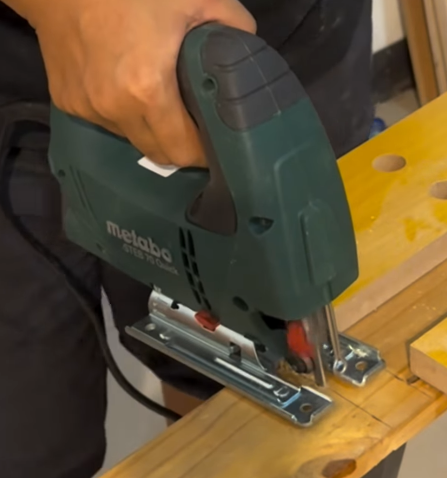
A jigsaw is probably the single best choice for general indoor wood cutting if you only want to own one saw. It’s lightweight, easy to control with one hand, and you can do curves, straight cuts, and notches all with the same tool.
Most modern jigsaws also have a dust blower or a vacuum port you can hook a shop vac to, which cuts down on mess considerably.
The tradeoff is that jigsaws aren’t great for thick lumber or perfectly straight long cuts; they tend to wander a bit if you’re not using a guide rail. But for plywood, MDF, softwood boards under an inch or so thick, and shaped cuts, it’s hard to beat.
Circular saw (compact/cordless): good for straight cuts, but loud
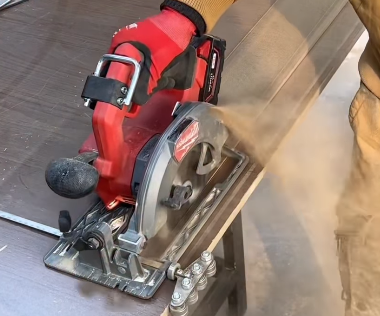
A compact circular saw, especially a cordless one, gives you clean, fast, straight cuts and handles thicker material better than a jigsaw. The catch indoors is noise and dust. Circular saws throw a lot of debris, and they’re considerably louder than a jigsaw or hand saw.
If you go this route, pair it with a saw that has a dust port, hook up a shop vac, and do the cutting on a workbench with a drop cloth underneath. Earplugs aren’t a bad idea either, even for you.
This is a solid pick if you’re cutting plywood sheets down to size or doing straight rip cuts on boards, but it’s overkill for small craft or trim work.
Hand saws and coping saws: quiet, precise, but slow
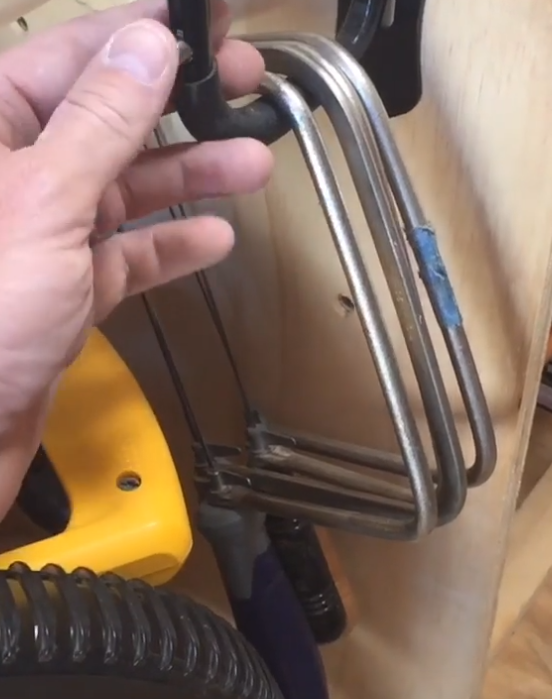
If noise is your number one concern say you’re in an apartment late at night or just don’t want a motor running a good old hand saw, or a coping saw for detail work, is genuinely underrated. No cord, no battery, no motor whine.
Dust is minimal compared to power tools. The downside is obvious: it’s slower and more physically tiring, and not practical for big jobs.
For small projects like cutting dowels, trimming a board by an inch, or shaping curves in thin wood, a coping or hand saw is actually a great indoor option that a lot of people overlook.
Mini table saws and hobby saws: best for precision work
If you’re doing model making, fine woodworking, or detailed craft projects, a benchtop mini table saw or a rotary tool with a cutting wheel might be the better call.
These are built for control over raw power; they’re quieter than full-size table saws, and many have built-in dust trays. Just don’t expect them to handle anything thicker than craft-grade material.
Oscillating multi-tools: the dust-and-noise compromise
Worth a mention here, oscillating multi-tools with a wood-cutting blade attachment are surprisingly handy indoors.
They’re not going to replace a saw for big cuts, but for trimming door frames, cutting small notches, or doing repair work without dragging a big tool inside, they’re quiet-ish, low-dust, and very controllable.
My actual recommendation
If you want one tool that covers the most indoor scenarios without being a nightmare to clean up after, get a corded or cordless jigsaw with a dust port, and pick up an inexpensive shop vac to run alongside it.
Add a coping saw to your toolbox for the small, quiet jobs. That combination will probably handle 90% of what people actually need to cut inside a home.
If your projects regularly involve thicker boards or full plywood sheets, then a compact circular saw is worth the noise tradeoff, but try to do that cutting in a garage or basement rather than a living space if at all possible, even with dust collection, fine particles still get airborne.
A few tips, regardless of which saw you pick
Lay down a drop sheet or old blanket before you start, since dust travels further than you’d think. Crack a window or run a fan to push dust out rather than letting it settle. Wear a basic dust mask, especially with MDF or treated wood, since the fine particles aren’t great to breathe in repeatedly.
Use a sawhorse or stable table rather than cutting on the floor or your lap. Control matters more indoors, where there’s less room to recover from a slip.
FAQs
Can I use a regular circular saw indoors safely?
You can, but it’s going to be loud and dusty, so it’s better suited to a garage, basement, or a well-ventilated room rather than a living space. If you must use one inside, attach a dust collection port and lay down drop cloths first.
What’s the quietest saw for cutting wood indoors?
A hand saw or coping saw is by far the quietest option since there’s no motor at all. Among power tools, jigsaws tend to run quieter than circular saws or table saws.
Is a jigsaw good enough for cutting plywood?
Yes, a jigsaw handles plywood and MDF well, especially sheets under an inch thick. For long, perfectly straight cuts on full sheets, a circular saw with a guide rail will give cleaner results, but a jigsaw is more than capable for smaller pieces.
How do I stop sawdust from spreading all over my house?
Attach a shop vac to your saw’s dust port if it has one, work over a drop cloth, and keep a window cracked or a fan running to pull airborne dust away from the room. Vacuuming immediately after cutting also helps a lot.
What saw should I buy if I’m just doing small craft or hobby projects?
A coping saw or a small benchtop hobby saw is usually a better fit than a full-size power tool. They’re quieter, more precise for detail work, and produce far less mess than anything designed for construction-grade lumber.

I’m Alex, the voice behind Saw Mentor. With years of real, hands-on experience in the tools industry, I’ve learned one thing: the right tool makes all the difference.
At Saw Mentor, I share straightforward advice, honest reviews, and practical insights to help you make smarter decisions without the guesswork.