

If you’ve ever pulled a board off the saw and found ugly brown scorch marks running along the edge, you know how frustrating it is. You did everything right, or so you thought, and now you’ve got a piece of wood that smells like a campfire and looks like it.
The good news is that burning is almost never a mystery once you know what to look for, and it’s even less of a mystery once you understand what’s actually happening between the blade and the wood.
What’s Actually Causing the Burn
At the most basic level, burning happens because of friction. A saw blade is supposed to slice through wood fibers cleanly, the way a sharp knife glides through a tomato. When something interferes with that clean slicing action, the blade starts rubbing against the wood instead of cutting it.
Rubbing creates heat, and enough heat scorches the wood right there in the kerf. It’s the same reason you can start a small fire by rubbing two sticks together, just on a much smaller and faster scale.
So the real question isn’t really “why does wood burn,” it’s “what’s making my blade rub instead of cut.” And there are a handful of usual suspects.
A Dull Blade Is the Most Common Culprit
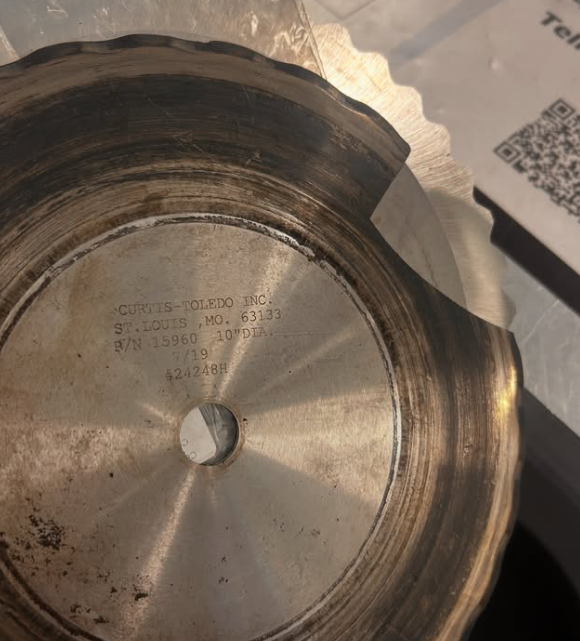
This is the one that catches almost everyone at some point. A sharp blade shears through wood fibers efficiently, but as the teeth wear down, they stop slicing and start pushing and grinding against the material.
That grinding generates a lot more heat than a clean cut ever would. The frustrating part is that dulling happens slowly, so you might not notice your blade losing its edge until one day the burning shows up seemingly out of nowhere.
If your cuts feel like they need more muscle than they used to, or the saw seems to be working harder for the same result, a dull blade is probably your answer.
Feeding the Wood Too Slowly
It feels counterintuitive, but moving the wood through the blade too slowly can cause just as much burning as moving it too fast. When you hesitate or creep along, individual teeth spend extra time in contact with the same spot of wood instead of slicing through and moving on.
That extra dwell time means extra friction. A smooth, steady feed rate, not rushed, but not timid either, lets each tooth do its job and exit before the heat has a chance to build up.
Pitch and Resin Buildup on the Blade
Wood, especially softwoods like pine and cedar, contains natural sap and resin. As you cut, some of that sticky residue transfers onto the blade and slowly accumulates on the teeth. Over time, this buildup acts almost like a coating of glue, increasing friction and reducing how efficiently the blade actually cuts.
A blade can look perfectly fine from a few feet away and still be coated in enough pitch to cause burning. Soaking the blade in a cleaning solution and scrubbing it with a brush usually solves this in a few minutes.
Wrong Blade for the Job
Not every blade is meant for every cut. A fine-tooth blade designed for clean crosscuts will struggle and overheat if you use it to rip through thick hardwood, simply because it wasn’t built to clear material fast enough for that kind of cut.
Likewise, certain wood species like cherry, maple, and purpleheart are just naturally more prone to scorching, even with a good blade, so you may need to adjust your technique or swap blades depending on what you’re working with.
Misalignment in the Saw
Sometimes the problem has nothing to do with the blade itself. If the fence and blade aren’t perfectly parallel, or the miter gauge is slightly off, the wood gets forced against the side of the blade as it passes through.
That sideways rubbing generates heat just like a dull blade would, except replacing the blade won’t fix anything because the blade was never the problem. A quick alignment check can save you from chasing the wrong fix.
How to Stop It From Happening Again
Most of the time, fixing wood burn comes down to a short checklist: keep your blade sharp, keep it clean, match the blade to the material, feed the wood at a steady pace, and make sure your saw is properly aligned.
Run through those in order, and you’ll usually find the culprit pretty quickly. It’s rarely more than one issue at a time, so once you isolate it, the fix tends to be simple.
FAQs
Can a brand-new blade still burn wood?
Yes. A new blade can burn wood if it’s the wrong type for the cut, if the saw is misaligned, or if you’re feeding the wood too slowly. Sharpness isn’t the only factor.
Does burning damage the structural strength of the wood?
Usually not significantly, but it does leave a charred surface that can affect glue bonds and finishing. Light burns can often be sanded out.
Why does cherry wood burn more than other woods?
Cherry has a high resin and sugar content compared to many other species, which makes it more prone to scorching even under normal cutting conditions.
Should I slow down if I see burn marks starting?
No, usually the opposite. Slowing down increases contact time between the teeth and the wood, which often makes burning worse rather than better.
How often should I clean my saw blade?
It depends on how much you use it and what you’re cutting, but if you’re working with resinous wood like pine regularly, cleaning every few sessions is a reasonable habit to avoid buildup.

I’m Alex, the voice behind Saw Mentor. With years of real, hands-on experience in the tools industry, I’ve learned one thing: the right tool makes all the difference.
At Saw Mentor, I share straightforward advice, honest reviews, and practical insights to help you make smarter decisions without the guesswork.