

Not everyone wants to deal with a chainsaw, and honestly, for most backyard pruning jobs, you don’t need one. Chainsaws are loud, heavy, and overkill for trimming a few overgrown limbs off the oak by your fence. If you’re dealing with branches under six inches thick, there are simpler tools that get the job done with way less risk.
I’ve trimmed plenty of trees over the years using nothing but a hand saw and a pole pruner, and the truth is these methods are often safer anyway, since you’re not fighting a spinning chain near your face.
This guide walks through the tools that actually work, how to use them without hurting yourself or damaging the tree, and a few mistakes that send people to the ER every spring.
Why Skip the Chainsaw in the First Place
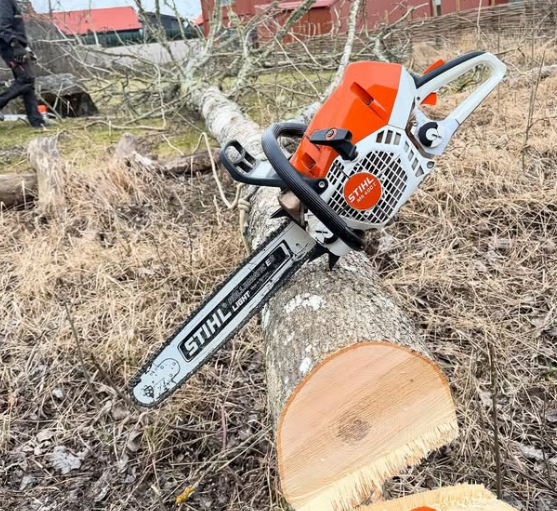
Chainsaws are fantastic for felling trees or bucking up firewood, but they’re genuinely dangerous for pruning. Kickback happens fast, and when you’re holding a running saw above your head or at an awkward angle, there’s very little room for error.
A lot of pruning injuries come from people using a tool that’s more powerful than the task calls for. For branches up to about 4-6 inches in diameter, a hand tool gives you more control. You feel the cut happening, you can stop instantly, and there’s no motor torque pulling the blade somewhere you didn’t intend.
Tools That Get the Job Done
Hand pruning saw: A folding or fixed-blade pruning saw is the workhorse here. The curved-blade Japanese-style saws (like a Silky or similar) cut on the pull stroke and slice through green wood fast. Great for branches up to 4 inches thick.
Bypass loppers: Think oversized scissors with long handles. Perfect for branches under 2 inches. The leverage from the handles does most of the work for you.
Pole saw or pole pruner: This is the one that really replaces a chainsaw for most homeowners. A pole pruner has a saw blade or a cutting head on a long extendable pole, so you can reach branches 10-15 feet up without climbing a ladder. Some are manual (rope-pulley cutting head), some are battery powered.
Hand pruners (secateurs): For anything pencil-thick or smaller, like suckers and small twigs. A cordless reciprocating saw with a pruning blade is also worth mentioning if you want something a bit faster than hand sawing but still don’t want a chainsaw’s weight and kickback risk.
Safety Gear You Shouldn’t Skip
Before any of this, gear up properly. It sounds obvious, but it’s the step most people rush past. Safety glasses are non-negotiable, since sawdust and falling debris go exactly where you don’t want them.
Work gloves with good grip protect your hands from blisters and splinters. A hard hat matters more than people think if you’re cutting anything overhead, because branches don’t always fall the way you expect.
Sturdy boots with ankle support help on uneven ground, and long sleeves plus pants protect against scratches from bark and twigs. If you’re using a ladder, never lean it against the branch you’re cutting. Lean it against the trunk or a stable section nearby instead.
Step-by-Step: Cutting a Branch Safely
1. Look up before you cut. Check for dead wood overhead, power lines, or anything that could fall on you. This single habit prevents more injuries than any tool choice.
2. Plan your escape route. Once a branch starts to fall, you want to step back, not stand there admiring your work.
3. Use the three-cut method for anything heavier than a broomstick. First, make an undercut about 12-18 inches from the trunk, cutting up about a quarter of the way through the branch. Second, cut downward a couple of inches further out from that undercut, all the way through.
The branch will drop without tearing bark off the trunk. Third, remove the remaining stub close to the trunk with a clean cut just outside the branch collar (that slightly swollen ring where the branch meets the trunk).
4. Never cut flush against the trunk. Leaving that small collar lets the tree heal properly. Cutting flush damages the tree’s natural defense system and invites rot.
5. Don’t cut directly above your head with a hand saw for long stretches. Use a pole saw instead, or get on stable footing where you’re not straining your neck and arms while gravity works against you.
6. For thick branches with a pole saw, make a small undercut first, too. Otherwise, the weight of the branch can pinch the blade or cause it to splinter and tear as it falls.
Common Mistakes That Cause Injuries
Standing directly under the branch you’re cutting is probably the number one mistake. Branches don’t fall straight down; they swing, twist, and sometimes bounce. Give yourself room.
Using a ladder that’s not rated for the job, or balancing on the top rung, causes a huge number of fall injuries every year. If you can’t reach a branch safely from a stable platform, a pole pruner from the ground is the better call.
Cutting branches in sections that are too long means you’re holding a lot of weight right as the cut finishes, and that weight can snap downward unpredictably. Cut in shorter sections when you’re working at height. Ignoring tension in the wood is another one.
A branch under tension (like one that’s bent or partially broken already) can spring back violently when cut. Approach those carefully and assume the wood will move.
When to Just Call a Professional
If a branch is thicker than 6 inches, is near power lines, is over a roof or a structure, or requires you to climb higher than a step ladder can safely take you, it’s worth paying an arborist. The cost of a service call is a lot less than the cost of a fall or a damaged roof.
There’s no shame in knowing your limits here; professionals do this daily and have the rigging and training for a reason.
FAQs
Can I cut thick tree branches without any power tools at all?
Yes, up to about 4-6 inches in diameter, a sharp hand pruning saw works well. Beyond that, it takes a lot more effort and time, and a pole saw or reciprocating saw becomes a more practical choice.
What’s the best tool for cutting high branches without a ladder?
A pole pruner or pole saw is the go-to option. They extend several feet and let you reach branches 10-15 feet up while keeping both feet on the ground.
Is it safe to cut branches above my head?
It can be, but it’s tiring and harder to control with a hand saw. Use a pole saw for overhead cuts whenever possible, and always wear eye protection since debris falls straight down.
Why shouldn’t I cut a branch flush against the trunk?
Cutting flush removes the branch collar, which is the tissue that helps the tree seal and heal the wound. Leaving a small collar intact reduces the risk of disease and rot getting into the trunk.
How do I stop a branch from tearing bark as it falls?
Use the three-cut method: an undercut first, then a cut from above further out, and finally trim the remaining stub. This stops the branch’s weight from ripping bark down the trunk as it breaks free.

I’m Alex, the voice behind Saw Mentor. With years of real, hands-on experience in the tools industry, I’ve learned one thing: the right tool makes all the difference.
At Saw Mentor, I share straightforward advice, honest reviews, and practical insights to help you make smarter decisions without the guesswork.
1 thought on “How To Cut Tree Branches Without A Chainsaw Safely?”