

If your pruning saw has started chewing through branches instead of slicing them clean, you don’t necessarily need to drop money on a sharpening kit or take it to a hardware store.
Most pruning saws can be brought back to a usable edge with stuff you probably already have lying around the garage. It takes a bit of patience and a steady hand, but it’s not complicated once you know what you’re looking at.
First, Figure Out What Kind of Teeth You Have
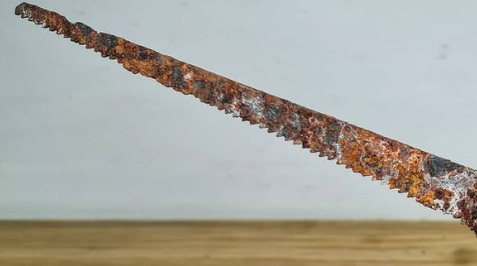
This matters more than people realize. Pruning saws generally come in two flavors:
Filed teeth: these are softer steel, and you can actually see individual triangular teeth with flat faces. Run your thumb (carefully) along the blade, and you’ll feel distinct points you can work on one at a time.
Impulse-hardened teeth: common on a lot of folding pruning saws and the cheaper Japanese-style blades. These are heat-treated to be super hard, so they stay sharp longer, but that same hardness means a regular file will just skid right off them. You’ll know you have these if the teeth look unusually shiny or bluish and a file doesn’t seem to bite at all.
If you’ve got impulse-hardened teeth, honestly, hand sharpening isn’t going to do much for you. Those blades are designed to be replaced, not sharpened, and most manufacturers will tell you the same thing. If that’s your situation, skip down to the FAQ section where I cover what to do instead.
If you’ve got filed teeth, good news – this is very doable.
What You’ll Need (Nothing Fancy)
- A small flat or triangular file (a cheap one from a hardware store works fine, doesn’t need to be a specialty saw file)
- A vice, clamp, or even just two pieces of wood to hold the saw steady
- Work gloves
- A rag and a bit of light oil (3-in-1 oil, even cooking oil in a pinch)
- Good light, ideally natural daylight or a bright work lamp
That’s it. No saw-setting tool, no specialty jig.
Clean the Blade First
Before you touch a file to the teeth, wipe the blade down. Sap, dirt, and rust buildup will make it hard to see what you’re actually sharpening and can throw off your filing angle. A rag with a little oil usually does the trick. If there’s stubborn sap, rubbing alcohol cuts through it well. Dry the blade off before you start filing – wet metal and files don’t get along.
Secure the Saw
This is the step people skip and then wonder why their edge comes out uneven. You need the blade to stay completely still while you work. Clamp it in a vice if you have one, teeth facing up and slightly away from you.
No vice? Sandwich the blade between two scrap boards in a clamp, or even just wedge it firmly against a table edge with something heavy on top. The point is zero wobble.
Find the Existing Angle and Match It
Look closely at how the teeth are already filed. Most pruning saws have teeth angled around 20 to 25 degrees relative to the blade, and on many saws, every other tooth is angled in the opposite direction so the blade cuts a slightly wider channel than the blade thickness (this is called the “set,” and it’s what keeps the blade from binding in the wood).
Don’t try to change the angle or the set, just follow what’s already there. You’re restoring the edge, not redesigning it.
File Each Tooth, One Direction at a Time
Pick a tooth, set the file against the existing bevel, and push forward with even pressure. Don’t saw back and forth with the file – that dulls it fast, and you lose control.
Lift the file on the return stroke, reposition, and push again. Three to five strokes per tooth are usually enough unless the edge is really beat up.
Work on every tooth angled in the same direction first, moving down the blade in one pass. Then flip around (or rotate the saw in the clamp) and do the teeth angled the other way. This keeps your rhythm consistent, and you’re less likely to skip a tooth or double up on one by accident.
Try to count your strokes and keep the pressure the same for every tooth. Uneven filing means uneven teeth, and that shows up as a saw that pulls to one side when you cut.
Check Your Work As You Go
Every ten teeth or so, stop and look at the edge in good light. You’re looking for a thin, even shine along each tooth tip – that’s the new edge catching the light.
If some teeth are shinier than others, they need a touch more work. This back-and-forth checking is honestly more important than getting the filing motion perfect on the first try.
Knock Off the Burr
After filing both sides, run a fingernail (carefully, or use a folded piece of cardboard) lightly along the flat back of the blade. You may feel a tiny wire-thin burr from the filing.
A couple of very light strokes with the file flat against the back of the blade will knock this off. Don’t overdo it, or you’ll round over the edge you just created.
Oil It Before You Put It Away
Wipe the blade down with a light coat of oil before storing it. This isn’t just about sharpness; it stops rust from creeping in, especially if your saw lives in a shed or gets left in damp conditions between seasons.
Test Cut
Try the saw on a small branch before tackling anything serious. You should notice the difference immediately – it should bite into the wood and pull through with way less arm effort than before. If it’s still dragging or skipping, go back over the teeth that look duller than the rest.
A Few Things to Keep in Mind
Going slow matters more than going hard. A light touch with more passes beats pressing hard and hoping for the best. Also, don’t expect factory-new sharpness from a hand file – you’re restoring working sharpness, not showroom sharpness, and that’s all a pruning saw really needs anyway.
FAQs
Can I sharpen impulse-hardened teeth at all?
Not really, not with a standard file. The hardening process that makes those teeth last longer also makes them too hard for a file to cut into. Some people have luck with a diamond file or diamond rotary tool attachment since diamond is harder than the hardened steel, but for most people, it’s more practical to just replace the blade when it dulls. Many folding pruning saws are designed with replaceable blades specifically for this reason.
How do I know if my file is too coarse or too fine for the job?
A medium-cut file is the safe middle ground for most pruning saw teeth. Too coarse and you’ll remove more metal than needed and roughen the edge; too fine and you’ll be filing forever without making progress. If you’re not sure, do a test pass on one tooth and see how much metal comes off with three strokes – adjust from there.
How often does a pruning saw actually need sharpening?
It depends entirely on how much you use it and what you’re cutting. Occasional homeowner use on soft green wood might only need a touch-up once a season. If you’re cutting a lot of dense or dry wood, or you’ve hit dirt or a nail by accident, you’ll feel it dulling much sooner. A good habit is to check the edge whenever you notice you’re pressing harder than usual to get through a cut.
Is it bad to use a regular metal file instead of a dedicated saw file?
Not at all, for filed-tooth saws, a plain flat or triangular file works fine. Dedicated saw files are just shaped to make certain blade profiles easier to reach, but a basic hardware store file will sharpen the teeth just as effectively. The shape mainly affects convenience, not the quality of the edge.
What’s the biggest mistake people make when sharpening a pruning saw by hand?
Changing the angle of a few teeth without realizing it. Once a couple of teeth are filed at a different angle than the rest, the saw starts cutting unevenly and feels rough no matter how sharp each individual tooth is. Going slow and checking your angle against the unfiled teeth nearby fixes this before it becomes a real problem.

I’m Alex, the voice behind Saw Mentor. With years of real, hands-on experience in the tools industry, I’ve learned one thing: the right tool makes all the difference.
At Saw Mentor, I share straightforward advice, honest reviews, and practical insights to help you make smarter decisions without the guesswork.