

If your circular saw keeps getting stuck mid-cut, you’re not alone; it’s one of the most common frustrations for both DIYers and experienced woodworkers. The good news is that most causes have a simple fix. In this guide, we’ll walk through every reason your saw might be jamming and exactly what to do about it.
Why Does My Circular Saw Keep Getting Stuck?
A circular saw gets stuck primarily because of wood pinching the blade (kerf binding), a dull or incorrect blade, improper blade depth, warped or wet wood, or a motor/power issue. Let’s go through each cause in detail.
1. Wood Is Pinching the Blade (Kerf Binding) The #1 Cause
This is the most common reason a circular saw gets stuck, and it’s the one most people overlook.
When you make a cut, the wood fibers on either side of the blade relax and expand slightly, especially in green, wet, or tension-loaded wood. This causes the two sides of the cut (the kerf) to close back in and squeeze the blade. The saw stalls, and you’re stuck.
How to fix it:
- Support both sides of the workpiece as close to the cut line as possible. If the offcut side is unsupported and sagging, it will pinch the blade every time.
- Use a kerf wedge or splitter, a thin piece of wood or plastic tapped into the cut behind the blade to keep it open as you go.
- Never rest the workpiece across two sawhorses with the cut in the middle; the wood will flex down and squeeze the blade shut.
How to free the saw when it’s already stuck:
- Release the trigger immediately; do not force it.
- Wait for the blade to stop completely.
- Gently back the saw out the way it came in, don’t twist sideways.
- Add support under the offcut or insert a wedge into the kerf.
- Resume the cut slowly and steadily.
2. Blade Is Dull or Wrong for the Material
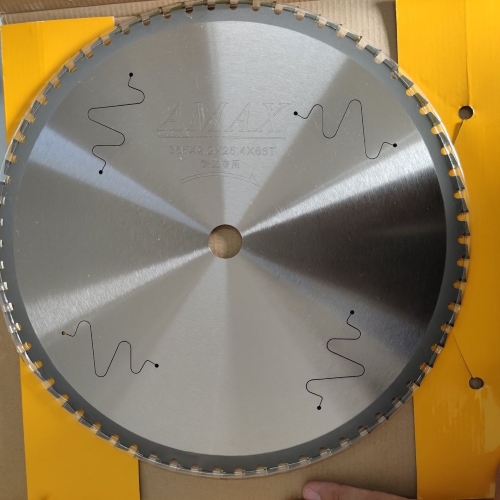
A dull blade doesn’t cut cleanly; it tears and drags through the wood, generating heat and friction that cause the saw to bind and slow down. This is especially common if you’ve been using the same blade for a long time without replacing it.
The wrong blade type causes the same issue. Using a ripping blade on fine crosscuts or a wood blade on composite materials will cause the saw to fight the material instead of cutting it.
Signs your blade is dull:
- The saw has to be forced through the cut
- You notice burn marks or scorching on the wood
- The cut edge is rough and splintered rather than smooth
How to fix it:
- Replace or sharpen the blade. Carbide-tipped blades typically last much longer than standard steel blades.
- Match the blade to the material: use a crosscut blade for cutting across the grain, a ripping blade for cutting with the grain, and a specialty blade for metal, laminate, or plastic.
- A general rule: the more teeth, the smoother (but slower) the cut; fewer teeth means faster, rougher cuts.
3. Blade Depth Is Set Incorrectly
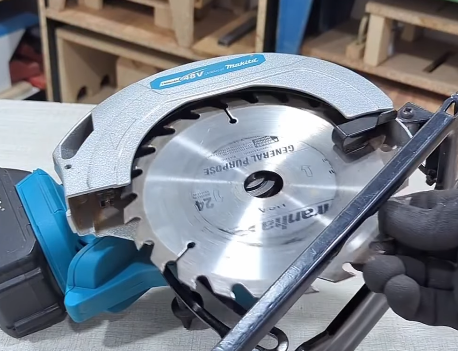
This is a cause many people miss entirely. If the blade is set too deep, far more of the blade is exposed to the material than necessary. That extra blade surface creates friction, increases the chance of binding, and makes the saw work much harder than it needs to.
The correct depth: Set the blade so it extends no more than ¼ inch (6mm) below the bottom of the material you’re cutting. Just enough tooth to clear the cut, nothing more.
How to fix it:
- Loosen the depth adjustment lever or knob on your saw.
- Hold it against the edge of your workpiece and lower the blade until only a small amount clears the bottom.
- Lock it in and test on scrap wood first.
Too shallow is also a problem if the blade doesn’t fully exit the material; it will bind as well. Find the right balance.
4. You’re Not Cutting in a Straight Line
A circular saw blade has almost no tolerance for sideways pressure. If you’re applying any lateral force, even slightly, the blade will drag against the wood, overheat, and jam.
This often happens when cutting freehand without a guide, especially on long cuts.
How to fix it:
- Use a straight edge or rip fence clamped to the workpiece for long cuts. Most circular saws have a built-in rip fence that slots into the shoe.
- Use a speed square as a guide for crosscuts.
- Let the saw move at its own pace, don’t push it. Feed the saw at the speed it naturally wants to cut without forcing.
5. Cutting Wet, Green, or Warped Wood
Wet or green lumber contains moisture that causes fibers to swell and move during cutting. Warped boards are under internal tension when you cut through them; that tension releases and the wood shifts, pinching the blade.
How to identify it:
- The wood feels heavy or looks discolored with moisture
- The board bows or twists visibly before you even cut it
- You hear the saw laboring suddenly mid-cut
How to fix it:
- Allow green lumber to dry before cutting where possible.
- For warped boards, make relief cuts or cut in shorter sections.
- Support the workpiece carefully so that any movement works with the cut rather than against the blade.
- Cut slowly and be ready to insert a wedge behind the blade.
6. Blade Is Not Properly Secured (Loose or Damaged Arbor)
The arbor is the metal shaft the blade mounts to. If the arbor nut is loose, the blade can wobble slightly during cutting. This wobble increases friction and can cause the blade to catch and stick in the material.
A damaged arbor (bent or corroded) creates the same problem and is a safety hazard.
How to fix it:
- Unplug the saw before checking anything.
- Inspect the arbor for visible damage, bending, or excessive rust.
- Use the blade lock button and the included wrench to tighten the arbor nut firmly. Don’t overtighten, just snug.
- Make sure the blade is seated flat against the flange with no gaps.
7. Motor or Power Issues
If the motor is underpowered, failing, or not getting consistent electricity, the blade will slow under load and can stall completely. This is more common with older saws, cheap models, or when cutting very thick material.
Common motor/power causes:
- Frayed or damaged power cord: Inspect the full length of the cord for cuts, kinks, or exposed wire. Replace immediately if damaged.
- Loose connection at the plug or switch: a flickering power supply causes the motor to lose torque under load.
- Overheating: if the saw has been running for a long time, the thermal cutoff will shut it down. Let it rest for 10–15 minutes and clear any sawdust from the vents.
- Worn motor brushes: on older saws, carbon brushes wear down and lose contact with the motor. These can be replaced cheaply.
- Weak battery (cordless saws): a depleted or aging battery doesn’t supply enough current for heavy cuts. Charge fully or try a fresh battery.
For corded saws: Make sure you’re not using an extension cord that’s too thin or too long. A 10-gauge or 12-gauge cord is recommended for most circular saws.
8. Blade Clogged with Debris or Resin
Sawdust, resin, and pitch build up on the blade over time, especially when cutting softwoods and pressure-treated lumber. This coating insulates the blade teeth, causing heat buildup and drag.
How to fix it:
- Remove the blade and soak it in blade cleaner or a mixture of water and dish soap.
- Scrub with a stiff brush to remove residue.
- Dry and reinstall. Clean blades cut dramatically better and faster.
- Clean blades after every few uses, or whenever you notice increased resistance.
How to Free a Stuck Circular Saw Step by Step
If your saw is stuck right now, here’s what to do:
- Release the trigger immediately. Don’t try to power through it.
- Wait for the blade to stop fully before touching anything near it.
- Unplug or remove the battery for safety.
- Gently back the saw out the way it came, straight back along the cut line. Don’t twist or lever the blade.
- Identify the cause of the wood pinching? Is the blade dull? Is the workpiece unsupported?
- Fix the issue before resuming add support, insert a wedge, or adjust blade depth.
- Resume slowly without forcing the saw.
How to Prevent a Circular Saw from Getting Stuck
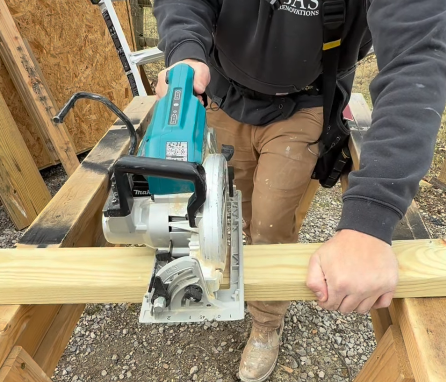
- Always support both sides of the cut close to the blade
- Set blade depth to ¼ inch below the material, never deeper than necessary
- Use a straight edge or rip fence for long cuts
- Keep the blade sharp and clean, replace when you see burn marks or rough edges
- Let the saw do the work, don’t push or force it through
- Inspect your workpiece for warps, knots, or moisture before cutting
- Check the power cord and connections regularly
- Let the saw rest if it overheats, don’t ignore thermal shutoffs
FAQs
Why does my circular saw get stuck halfway through a cut?
This is almost always kerf pinching the two sides of the cut, closing in and gripping the blade. It’s most common on unsupported workpieces or in green/wet lumber. Support both sides of the cut close to the blade and use a wedge in the kerf if needed.
Why does my circular saw bind when cutting thick wood?
Thick material puts more load on the motor and blade. Make sure your blade depth is set correctly (¼ inch below the material), your blade is sharp, and you’re feeding the saw slowly without forcing it. If the motor struggles, the blade or saw may not be rated for that thickness.
Can a circular saw kick back if it gets stuck?
Yes, kickback is exactly what happens when the blade binds suddenly. The saw can be thrown back toward you with significant force. Always stand to the side of the cut line, never directly behind the saw, and keep a firm two-handed grip.
Why does my circular saw keep stopping mid-cut?
If it stops abruptly, suspect the thermal overload protection (the saw overheated), a power supply issue, or a dying battery on cordless models. If it slows and stalls, the blade is likely binding due to pinching or being dull.
How do I tighten the blade on a circular saw?
Press the blade lock button (if your saw has one) to hold the blade still, then use the included wrench to tighten the arbor nut clockwise (for most saws, check your manual). The blade should sit flat with no wobble. Don’t overtighten.
How often should I clean my saw blade?
Ideally, after every few uses, or whenever you notice the saw working harder than usual. For resinous woods like pine, clean more frequently; pitch builds up fast and degrades cutting performance significantly.
Final Thoughts
A circular saw that keeps getting stuck is usually telling you something specific, most commonly that the wood is pinching the blade, the blade is dull, or the depth is set too deep. Start with the most likely cause (kerf pinching), work through the checklist above, and in most cases, you’ll have the problem solved without needing any professional help.
Keep the blade sharp, support your workpiece correctly, set the right depth, and let the saw cut at its own pace. Those four habits alone will prevent 90% of jamming issues.

I’m Alex, the voice behind Saw Mentor. With years of real, hands-on experience in the tools industry, I’ve learned one thing: the right tool makes all the difference.
At Saw Mentor, I share straightforward advice, honest reviews, and practical insights to help you make smarter decisions without the guesswork.
1 thought on “Why Does My Circular Saw Keep Getting Stuck?Causes + Fixes”