

If you’ve ever fought with a chainsaw that used to cut like butter and now just chews through wood, leaving sawdust that looks more like flour than chips, you already know the chain is dull.
The question everyone asks is how often this should actually happen, and the honest answer is: it depends on what you’re cutting, not on the calendar.
There’s no magic number that applies to every saw and every job. A chain sharpened every 2-3 hours of actual cutting time is a reasonable rule of thumb for clean softwood, but that number falls apart fast the moment dirt, rocks, or hardwood enter the picture.
Some people go a full day of light trimming without needing to touch a file. Others are sharpening mid-job because they clipped the dirt on one cut.
What Actually Wears Down a Chain
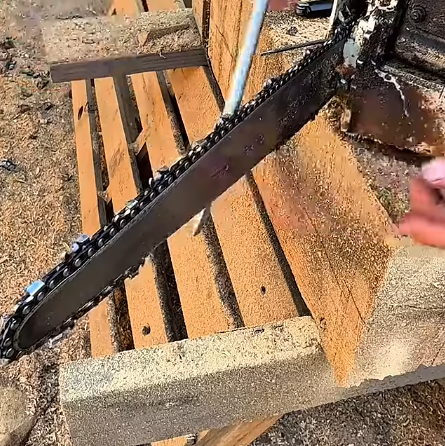
The cutting teeth on a chain are small and hardened, but they’re still just metal meeting wood over and over. Every pass dulls them a little, even under perfect conditions. What speeds that process up dramatically is contact with anything that isn’t clean wood.
Dirt is the biggest culprit. If your bar even grazes the ground during a felling cut or while bucking a log lying flat, that single touch can dull an entire chain instantly. Sand, grit embedded in bark, old fence wire hidden in a tree, and knots full of hard mineral deposits all do the same thing.
Hardwoods like oak and hickory dull a chain faster than pine or poplar simply because the wood fibers are denser and more abrasive.
Heat matters too. Running a chain that’s already getting dull generates more friction, which generates more heat, which softens the metal and speeds up wear even further. It becomes a downward spiral if you don’t catch it early.
Signs Your Chain Needs Sharpening
Forget waiting for a fixed hour count. Your saw will tell you when it’s time if you pay attention.
The most obvious sign is the sawdust texture. A sharp chain throws out chunky, stringy chips. A dull one produces fine powder that looks almost like sawdust from a sander. If you look down after a cut and see powder instead of chips, that’s your answer right there.
You’ll also feel it in how the saw behaves. A sharp chain pulls itself into the wood with very little downward pressure from you. A dull chain makes you push, and pushing a chainsaw is both exhausting and dangerous because it increases the chance of kickback. If you notice you’re leaning your weight into the cut to make any progress, stop and check the teeth.
Smoke is another giveaway. A chain that’s burning instead of cutting will smoke even in wood that isn’t particularly hard, and you’ll often smell it before you see it.
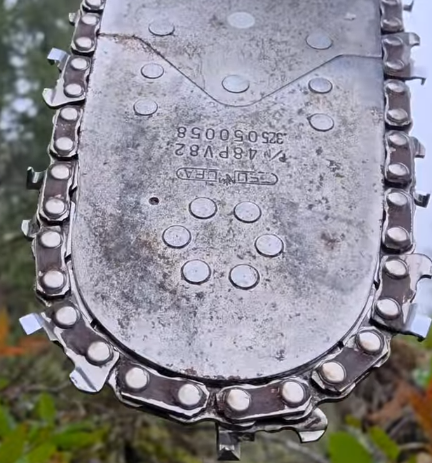
Finally, just look at the cutters themselves. Sharp teeth catch light and show a clean, shiny edge along the top plate. Dull ones look rounded over and dull-grey, almost matte, especially at the corner where the top plate meets the side plate.
A Practical Sharpening Schedule
For most homeowners, cutting firewood or doing occasional yard cleanup, sharpening after every 3-5 tanks of fuel is a decent starting point, then adjust based on what you’re actually seeing.
If you’re cutting standing dead trees that have been sitting near the ground, picking up grit, shorten that interval. If you’re cutting freshly felled clean pine on a mill setup, you can often stretch it further.
Professional loggers and arborists often touch up the chain every single time they refuel, using just a few strokes of the file to keep the edge fresh rather than waiting for it to go fully dull. This little-and-often approach is actually easier on the chain long term because you’re removing a tiny amount of metal each time instead of grinding away a lot of material to fix a badly dulled edge.
A good habit is to do a quick visual check before you even start the saw for the day. Thirty seconds looking at the teeth can save you an hour of frustrated cutting later.
Sharpening vs Replacing
Sharpening only works up to a point. Every time you file a chain, you remove a small amount of metal from the cutting edge. Eventually, the depth gauges (the little humps in front of each cutter) need to be filed down too, or the chain will stop cutting properly even with a sharp edge, because the cutters can no longer bite deep enough into the wood.
Most chains can handle somewhere between 10 and 15 sharpenings before they’re worn out, though this varies by chain quality and how much material you remove each time. If you’re hand-filing lightly and correctly, you’ll get more life out of it. If you’re grinding heavily every time to fix damage from hitting dirt or rocks, you’ll burn through chains much faster.
Once the cutters get too short, or you notice the chain is stretching excessively and needing constant tensioning, it’s time to retire it rather than keep sharpening.
FAQs
How many cuts before a chainsaw chain gets dull?
There’s no fixed cut count because it depends entirely on wood type and cleanliness. A chain can go dozens of clean cuts in soft pine without trouble, or dull instantly from one cut that touches dirt or a buried nail.
Can you sharpen a chainsaw chain too much?
Yes. Each sharpening removes metal, so over-sharpening or filing too aggressively shortens the chain’s overall lifespan. Light, frequent touch-ups are better than heavy, infrequent grinding.
Is it better to sharpen by hand or use a grinder?
Hand filing is gentler on the chain and works fine for regular maintenance. A bench grinder is faster and more useful for fixing significant damage, but it removes more metal and generates heat, so it should be used sparingly.
How do I know if my chain is too far gone to sharpen?
If the cutters are worn down close to the depth gauges, if the chain keeps stretching and needs constant retensioning, or if it’s been ground down repeatedly to fix chip damage, it’s usually more practical to replace it.
Does chain oil affect how often I need to sharpen?
Indirectly, yes. Proper lubrication reduces friction and heat buildup, which slows down wear. A dry or poorly oiled chain dulls faster and is more prone to overheating during cuts.