

If you’ve ever stood in the tool aisle trying to decide between a portable table saw vs circular saw, you already know the struggle. Both cut wood, both show up in almost every “must-have tools” list, and both have loyal fans who swear theirs is the only saw you’ll ever need.
The truth is a little less black and white. Each tool solves a different problem, and picking the wrong one for your project can cost you time, accuracy, or a trip back to the hardware store.
I’ve used both on everything from quick deck repairs to full cabinet builds, and the differences become obvious pretty fast once you start working with real material instead of reading spec sheets. Let’s break down what each saw is actually good at, where it falls short, and how to decide which one deserves a spot in your garage.
What Is a Portable Table Saw?
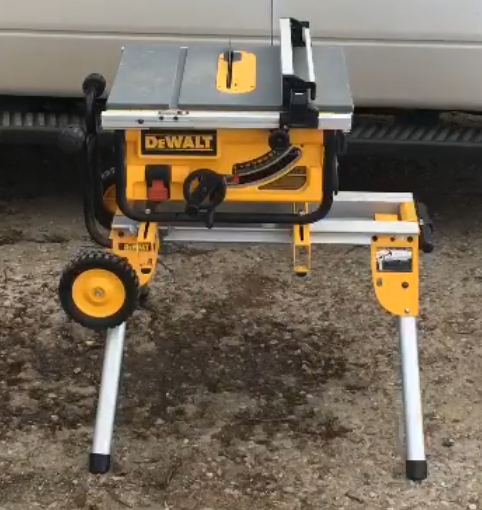
A portable table saw is basically a shrunk-down version of the big cabinet saws you’d find in a professional shop. The blade sits fixed in a table, and you push the wood through it instead of moving the saw around the wood.
Because the blade stays still and the fence guides your material, you get straight, repeatable cuts every single time. Most portable models weigh somewhere between 40 and 55 pounds, fold down on a stand or wheeled base, and are built for contractors who need shop-level accuracy without a permanent shop.
Where this saw earns its keep is ripping long boards down to width. Set the fence once, feed the board through, and you’ll get the same width cut after cut without measuring twice. That kind of consistency is hard to match with a handheld tool.
What Is a Circular Saw?
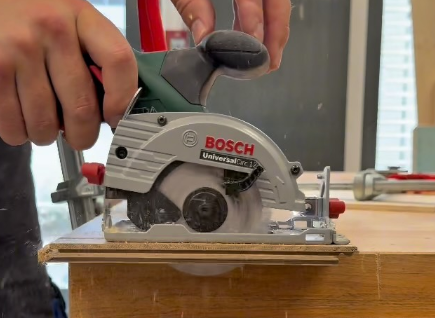
A circular saw flips the whole concept around. Instead of feeding wood into a stationary blade, you carry the saw to the material and guide it along your cut line freehand or with a straightedge clamped down.
It’s compact, usually under 10 pounds, and can go anywhere your project takes you, whether that’s a rooftop, a job site, or a sheet of plywood laid across sawhorses in your driveway.
Circular saws shine at breaking down large panels. Trying to wrestle a full 4×8 sheet of plywood through a table saw alone is awkward at best and dangerous at worst. A circular saw handles that same sheet in seconds, right where it’s sitting.
Portable Table Saw vs Circular Saw: Key Differences at a Glance
Here’s the short version before we dig into specifics. A portable table saw gives you precision, repeatability, and control for rip cuts and joinery work. A circular saw gives you speed, mobility, and the muscle to break down oversized material on site. Neither one is objectively “better” — they’re built for different halves of the same job.
Power & Cutting Capacity
Portable table saws generally run 15-amp motors and spin blades between 3,650 and 5,000 RPM, which is plenty for hardwoods, plywood, and most framing lumber. Cutting depth usually tops out around 3 inches, which covers the vast majority of home and jobsite needs.
Circular saws vary more depending on blade size. A standard 7-1/4 inch circular saw cuts about 2-1/2 inches deep at 90 degrees, while smaller compact models trade depth for weight savings. Cordless circular saws have closed the power gap significantly in the last few years, though corded models still edge ahead for all-day, heavy-duty cutting.
Accuracy Comparison
This is where the table saw wins, and it isn’t close. Because the blade is fixed and the fence provides a consistent reference point, every cut comes out the same width without you having to eyeball anything. If you’re building furniture, cabinets, or anything that needs tight-fitting joints, a table saw removes a lot of the guesswork.
A circular saw can absolutely produce accurate cuts, but it takes a steady hand, a good straightedge guide, and some practice. Freehand cuts drift more than people expect, especially on longer boards, so most pros pair a circular saw with a track or clamped guide rail when precision matters.
Rip Cuts vs Crosscuts
Rip cuts, meaning cuts made along the length of the grain, are a table saw’s home turf. Feed the board through against the fence, and you’re done. Crosscuts work fine too, especially with a miter gauge, though longer crosscuts can get awkward without extra support.
Circular saws handle crosscuts naturally since you’re guiding the saw across the board rather than pushing the board through a blade. Rip cuts are doable but require more setup and a longer, steadier pass than most people expect on the first few tries.
Portability & Jobsite Use
There’s no real contest here. A circular saw fits in a bag, runs on a battery, and goes wherever the work is. It’s the obvious choice for framing, deck building, or any job where you’re cutting material on location rather than in a fixed workspace.
Portable table saws are still lighter and more mobile than full cabinet saws, but “portable” is relative. You still need a flat surface to set it up, some room to feed longer boards, and a bit of time to level and square everything before you start cutting.
Safety Comparison
Both tools demand respect, but the risks look different. Table saws have a well-documented kickback risk if the fence isn’t aligned properly or the wood binds against the blade, which is why modern models come with riving knives, blade guards, and anti-kickback pawls. Learn to use those safety features, and a table saw is very manageable.
Circular saws carry their own risk since you’re holding a spinning blade a few inches from your hands while guiding it freehand. Blade guards, a firm grip, and never removing your hand from the trigger switch until the cut is finished go a long way toward keeping things safe.
Which Tool Is Better for Beginners?
Honestly, it depends on what you’re building first. If your early projects lean toward furniture, shelving, or anything needing precise, repeatable widths, a portable table saw will teach you good habits faster because the fence does a lot of the accuracy work for you.
If you’re starting with home repairs, framing, or general DIY projects, a circular saw is more forgiving to learn on and far more versatile for the kind of odd jobs beginners tend to tackle first.
Most people end up owning both eventually, just not necessarily on day one.
Can a Circular Saw Replace a Portable Table Saw?
For a lot of casual DIYers, yes, it can get you through most projects. Pair a good circular saw with a track guide and you can rip boards accurately enough for shelving, sheds, or basic furniture. What you lose is the speed and repeatability of a table saw when you’re making dozens of identical cuts, and you give up some of the fine control needed for tight joinery.
If your projects are occasional and varied, a circular saw alone might be all you need. If you’re doing serious woodworking with repeat cuts and tight tolerances, you’ll eventually want a table saw in the mix too.
Final Verdict
Neither saw makes the other obsolete, and that’s really the point. A portable table saw is the better choice when accuracy and repeatable rip cuts matter most, especially for furniture and cabinetry.
A circular saw wins when you need to break down large sheets, work on site, or stay mobile without sacrificing too much cutting power. Buy based on the projects you actually do, not the tool that sounds more impressive.
Conclusion
The portable table saw vs circular saw debate isn’t really about which tool is “better” overall; it’s about matching the tool to the task in front of you. If your work involves precise rip cuts and repeatable results, lean toward a table saw.
If you need something light, mobile, and capable of handling big sheet goods on location, a circular saw is hard to beat. Most serious DIYers and pros eventually land on owning both, using each one for exactly what it does best.
FAQ
Can a circular saw make cuts as accurate as a table saw?
With a quality straightedge or track guide, a circular saw can get close, but it still takes a steadier hand and more setup than a table saw’s fixed fence provides.
Is a portable table saw powerful enough for hardwood?
Yes, most portable table saws with a 15-amp motor handle hardwoods, plywood, and standard framing lumber without much trouble, as long as you’re using a sharp, appropriate blade.
Which saw is safer for a first-time DIYer?
Neither is inherently safer, but a table saw’s fixed blade and fence system tends to be more predictable for beginners, while a circular saw requires more hand control and awareness of the blade’s position.
Do I need both a table saw and a circular saw?
If you build furniture and also handle general home projects, having both makes sense since each covers gaps the other can’t fill efficiently.
What size circular saw blade is standard for most projects?
A 7-1/4 inch blade is the most common size and covers the vast majority of framing, plywood, and general cutting needs around the house.
Thanks for taking the time to read this guide! We hope it helped answer your questions. If there is anything you would like to add or ask, feel free to leave a comment below. You can also explore more helpful articles on our website.

I’m Alex, the voice behind Saw Mentor. With years of real, hands-on experience in the tools industry, I’ve learned one thing: the right tool makes all the difference.
At Saw Mentor, I share straightforward advice, honest reviews, and practical insights to help you make smarter decisions without the guesswork.
2 thoughts on “Portable Table Saw vs Circular Saw”