

If you’re setting up a workshop on a budget or just don’t have room for two big power tools, you’ve probably asked yourself: can a circular saw replace a table saw?
The short answer is yes; for most jobs, a circular saw can absolutely do what a table saw does, though there are a few situations where a table saw still has the edge.
Circular saws are portable, affordable, and surprisingly capable once you learn a few tricks. Table saws are more accurate out of the box and better suited for repetitive cuts, but they’re bulky and cost a lot more. So which one actually wins for your situation depends on what kind of work you’re doing. Let’s break it down properly.
What a Table Saw Does Better
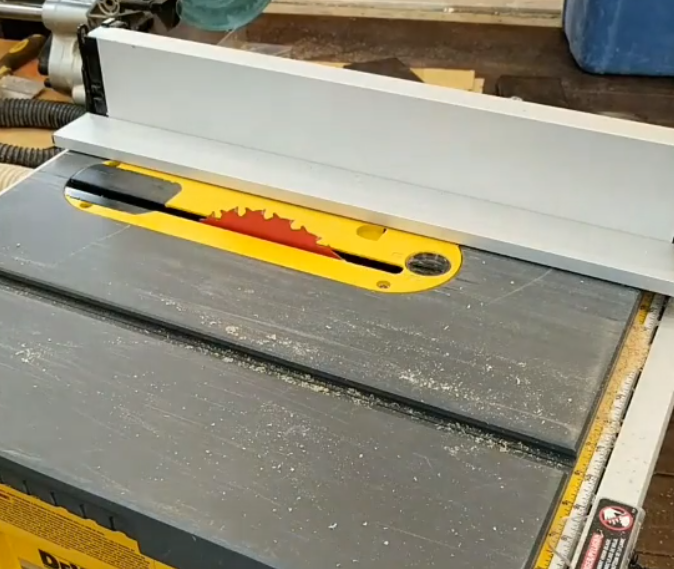
Table saws are built for precision. The blade stays fixed, and you guide the material through it using a fence or miter gauge. This setup makes it easy to get perfectly straight, repeatable cuts every single time. If you’re cutting dozens of boards to the exact same width, a table saw will save you a ton of time and frustration.
They’re also better for ripping long boards lengthwise. The fence keeps everything aligned, so you don’t have to worry about drifting off your line halfway through the cut. For furniture makers, cabinet builders, or anyone doing production work, this consistency matters a lot.
Where a Circular Saw Holds Its Own
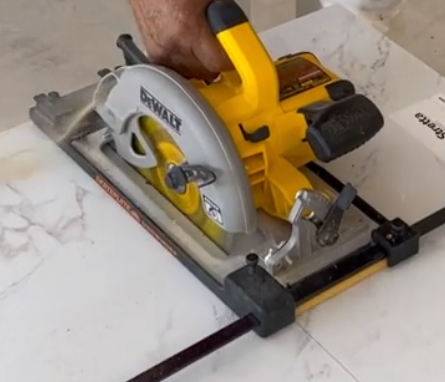
Now here’s the thing people often don’t realize. A circular saw paired with a good straightedge guide can match table saw accuracy for most cuts. You just need a track saw guide or a simple homemade jig, and suddenly your circular saw is cutting plywood sheets dead straight.
Circular saws also win when it comes to portability and breaking down large sheet goods. Try feeding a full sheet of plywood through a table saw by yourself. It’s awkward, sometimes dangerous, and honestly a two person job. A circular saw lets you cut that same sheet flat on the ground or on sawhorses, which is a lot more practical for most home workshops.
They’re also cheaper. You can pick up a solid circular saw for a fraction of what a decent table saw costs, and you don’t need dedicated floor space for it either. It goes in a drawer or a bag when you’re done.
The Real Limitations
Where circular saws fall short is in fine joinery work. Things like dado cuts, tenons, or anything that needs a dead flat, splinter free edge on both sides tend to come out better on a table saw. Bevel cuts are also easier to dial in precisely on a table saw since the angle setting is more stable and repeatable.
Ripping narrow strips is another area where circular saws struggle a bit. Cutting a thin strip off a board with a circular saw and guide is doable, but it’s fiddly and takes more setup than just running it through a table saw fence.
So Which One Should You Get?
If you’re a hobbyist, doing home renovations, or building simple furniture and shelving, a circular saw with a good track or guide rail will cover almost everything you need. Add a decent set of clamps and a straightedge, and you’re set for most projects.
If you’re doing cabinetry, fine furniture, or any work where precision and repeatability really matter, it’s worth investing in a table saw eventually, even if you start out with just a circular saw.
Plenty of woodworkers actually run both. They use the circular saw to break down big sheets into manageable pieces, then finish the precise cuts on the table saw. That combo covers pretty much every scenario.
Frequently Asked Questions
Can a circular saw cut as straight as a table saw?
Yes, if you use a straightedge guide or track system. Freehand, a circular saw won’t match a table saw’s accuracy, but with a guide clamped down, the results can be nearly identical.
Is it safe to rip plywood with a circular saw instead of a table saw?
It’s actually safer in many cases, especially for large sheets. Feeding a full sheet through a table saw alone can be risky, while cutting it flat on the ground with a circular saw and guide is more stable and controlled.
Do I need a table saw if I only do small home projects?
Not really. For shelving, trim work, and basic furniture, a circular saw with a good guide rail will handle most of what you need without the extra cost or space requirement.
Can a circular saw do bevel cuts like a table saw?
Yes, most circular saws tilt for bevel cuts, though getting the exact same angle every time takes a bit more care compared to a table saw’s fixed bevel adjustment.
What accessories make a circular saw work more like a table saw?
A track saw guide rail, a set of quality clamps, and a reliable straightedge are the main ones. Some people also build a simple table saw style jig using plywood and rails for extra stability on repeated cuts.
Thanks for taking the time to read this guide! We hope it helped answer your questions. If there is anything you would like to add or ask, feel free to leave a comment below. You can also explore more helpful articles on our website.

I’m Alex, the voice behind Saw Mentor. With years of real, hands-on experience in the tools industry, I’ve learned one thing: the right tool makes all the difference.
At Saw Mentor, I share straightforward advice, honest reviews, and practical insights to help you make smarter decisions without the guesswork.