

Let me just get straight to it: yes, you absolutely can use a pruning saw on dry wood. But there’s a bit more to that answer than a simple yes, and if you’re about to head outside with a saw in hand, it’s worth taking two minutes to read this first.
Why the Question Even Comes Up
Most people associate pruning saws with live branches, green, sappy, flexible wood that cuts almost satisfyingly easily. Dry wood is a different animal. It’s harder, more brittle, and it behaves differently under a blade. So it makes sense to wonder if the tool designed for one will hold up against the other.
Short answer: it will. Long answer: it depends on the saw, the wood, and what you’re actually trying to do.
The Difference Between Cutting Green and Dry Wood
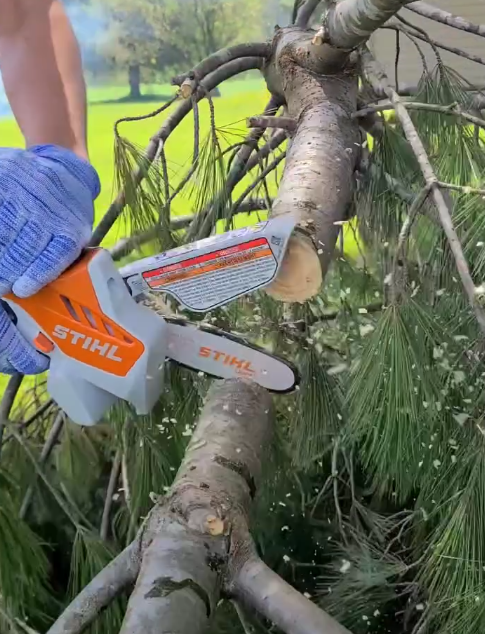
Fresh, living wood has moisture in it. That moisture actually makes it softer and easier to cut through in some ways; the fibers compress and give a little as the blade moves through. Dry wood has lost that moisture, which makes it denser and more resistant. The blade has to work harder, and so do you.
This matters because pruning saws are typically designed with a specific tooth geometry meant for green wood. The teeth are often larger and more aggressive, built to clear out the wet sawdust (called “kerf”) as you cut. Dry wood produces finer dust, and while that’s not a dealbreaker, it does mean the saw isn’t in its natural habitat.
So What Actually Happens When You Use a Pruning Saw on Dry Wood?
In most cases, it works fine. Here’s what you’ll notice:
It takes more effort. Don’t be surprised if a dead branch that looks thinner than a green one takes noticeably more strokes to get through. Density is doing that.
The saw may bind. Dry wood doesn’t give the blade the same clearance. If your pruning saw has coarse, widely spaced teeth, you might find it catches or sticks mid-cut. Going slower helps.
The blade dulls faster. This is probably the biggest practical concern. Dry, hardened wood is rougher on the teeth. If you’re cutting through a lot of dry material, your blade will lose its edge quicker than it would on green wood.
It still cuts cleanly enough. For most tasks, removing a dead limb, cleaning up storm damage, cutting down a dried-out shrub, or pruning a tree gets the job done without any drama.
When It’s Not Ideal
There are situations where a pruning saw really isn’t the right tool for dry wood:
- Large diameter dry logs: If you’re dealing with anything thicker than about 4–5 inches and it’s fully dry hardwood, a regular hand saw or even a small chainsaw, will be far more practical.
- Very old, weathered wood: Extremely dry wood that’s been sitting for years can be almost rock-hard. The pruning saw will technically work, but you’ll be at it for a while.
- Precision cuts for woodworking: Pruning saws leave a rougher cut. If accuracy matters, a different saw is a better call.
Tips for Using a Pruning Saw on Dry Wood
If you’re committed to the pruning saw and the dry wood isn’t going anywhere, a few things will make it easier:
Let the saw do the work. Forcing it creates binding and wears you out. Light pressure with a steady rhythm is more efficient than pushing hard.
Use the full length of the blade. Short, choppy strokes waste effort and heat the blade. Long, smooth strokes clear the dust and keep things moving.
Start the cut carefully with a short pull stroke to establish a groove before committing to full strokes. Dry wood doesn’t always cooperate with aggressive starts.
Check your blade condition first. A dull pruning saw on dry wood is a bad combination. If the blade hasn’t been used in a while or you notice it skating across the wood rather than biting in, it’s time to replace it. Most pruning saw blades are cheap enough that replacement beats frustration.
Wear eye protection. Dry wood sends chips and fine dust in all directions. It’s one of those things people skip until they catch a piece in the eye.
Does It Damage the Saw?
This is the question a lot of people really want to know. Will using a pruning saw on dry wood wreck it?
Not immediately, no. But it will shorten the blade’s useful life if you’re doing it regularly. Most modern pruning saw blades are hardened steel and can handle some abuse. The trade-off is that when they’re designed for green wood and you’re using them mostly on dry material, you’re just going through blades faster than you otherwise would.
If you find yourself regularly cutting a lot of dry, dead branches or old stumps, it might be worth picking up a dedicated dry wood hand saw and keeping the pruning saw for its intended purpose. You’ll get better results from both tools.
The Bottom Line
A pruning saw on dry wood isn’t a mismatch that’s going to cause any disaster. It works. It’s not the most efficient pairing, but for occasional dead branch removal or cleaning up after a dry season, you’ll get the job done without needing to run out and buy something new.
Just go in with the right expectations; it’ll take more effort, the blade will wear faster, and for anything large or particularly dense, you might want to reach for a different tool. But for the average backyard task? Your pruning saw is up to it.

I’m Alex, the voice behind Saw Mentor. With years of real, hands-on experience in the tools industry, I’ve learned one thing: the right tool makes all the difference.
At Saw Mentor, I share straightforward advice, honest reviews, and practical insights to help you make smarter decisions without the guesswork.