

You’re halfway through a cut, moving at a decent rhythm, and then the saw just stops. It grabs the wood and sticks, and no matter how hard you push or pull, it feels like you’re fighting the lumber instead of cutting it. Sound familiar?
A binding hand saw is one of the most frustrating things in woodworking, especially when you’re not sure what’s causing it. The good news is there are only a handful of real reasons this happens, and once you know what to look for, most of them are pretty easy to fix.
The Wood Is Pinching the Blade
This is hands-down the most common reason a hand saw binds, and it catches a lot of people off guard.
When you’re cutting through a board, especially a longer one resting on sawhorses or a workbench, the two halves of the wood can start to sag toward each other as you get deeper into the cut. That sagging puts pressure on both sides of the blade and squeezes it. The harder you push, the worse it grips.
The fix: Support both sides of the cut. If you’re cutting a long board, make sure neither end is hanging free. You want the wood supported close to the cut line, not just at the ends. A lot of guys also tap a wedge or even a flathead screwdriver into the kerf behind the blade to hold it open as they go. Works like a charm.
Your Saw Needs Sharpening
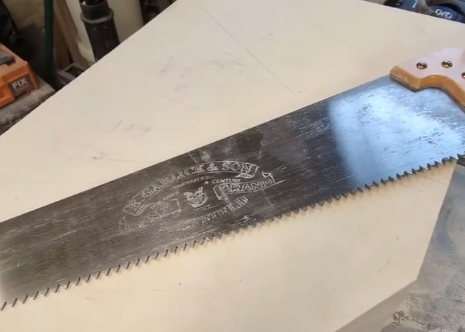
A dull saw doesn’t glide; it drags. And a saw that’s dragging creates friction, which creates heat, which makes the blade want to stick to the wood fibers instead of slicing through them cleanly.
This one sneaks up on you because saws don’t go dull overnight. You might not even notice it happening. One week, the saw feels fine, and a month later, every cut feels like a wrestling match.
The fix: Get the saw sharpened. You can do it yourself with a triangular file if you’re comfortable with it, or drop it off at a sharpening service. If it’s a cheap saw that’s not worth the effort, honestly, just replace the blade. Many modern hand saws have disposable blades specifically for this reason.
The Set Is Gone
Every hand saw blade has what’s called a “set.” The teeth are bent slightly outward, alternating left and right. That tiny outward angle is what creates the kerf (the slot the saw cuts). The kerf is deliberately a hair wider than the blade itself, which is what lets the blade move freely without rubbing against the wood walls on both sides.
When a saw gets old or has been over-sharpened, the set wears down. The teeth stop sticking out as much, the kerf gets narrower, and suddenly the blade is rubbing against the wood on every stroke instead of floating through it.
The fix: A saw set tool can re-bend the teeth back out. It’s a manual tool that’s not too expensive and pretty easy to use once you get the hang of it. If you’re not into saw maintenance, again, a new blade might just be the easier answer.
You are Not Cutting Straight
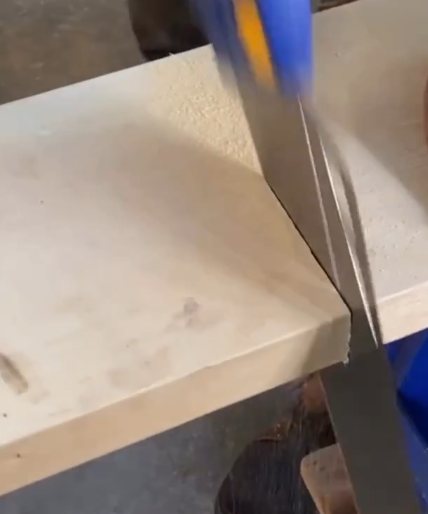
This one’s a technique issue, not a tool issue. If your blade starts drifting sideways, even slightly, the cut gets skewed, and the blade ends up fighting against the wood walls instead of following the kerf cleanly.
It happens more than people like to admit. You lose focus for a second, your wrist shifts, and now the saw is angled a few degrees off from where it started.
The fix: Use a guide. A miter box works great for crosscuts. For rip cuts, clamp a straight piece of scrap wood along your cut line and use it as a fence. And slow down, especially at the start of a cut. The first inch or two sets the direction for everything that follows.
The Wood Itself Is Causing Problems
Some woods just behave badly under a handsaw, and there’s not always a lot you can do about it.
Green or freshly cut wood has a ton of moisture in it. That moisture makes the fibers sticky, and the gummy blade coats itself in sap-like residue and starts to grab. Resinous woods like pine and fir are notorious for this, especially when they’re not fully dried.
Dense hardwoods like oak or maple create a lot of friction too, particularly if your saw isn’t perfectly sharp.
The fix: Wax the blade. No joke, just rub a candle or a bar of beeswax along the flat of the blade before you start cutting. It reduces friction dramatically and makes a huge difference with sticky or dense wood. Some guys use paste wax or even a little WD-40 in a pinch. Just don’t use anything that could stain wood you’re planning to finish later.
The Blade Is Bent or Kinked
If you’ve ever dropped a handsaw, leaned on it wrong, or had it torqued sideways in a tough cut, there’s a chance the blade has a slight bend or twist in it. Even a bend you can barely see is enough to cause the blade to bind repeatedly in the same spot every stroke.
Hold the blade up flat against a light source and look down its length; any warping or twist will show up pretty clearly.
The fix: Unfortunately, a bent blade usually means it’s time for a new saw or a blade replacement. You can sometimes straighten a mild bend by carefully pressing it against a flat surface, but it’s tricky, and you risk making it worse.
Quick Reference: Why Your Saw Is Binding
| Cause | What to Do |
|---|---|
| Wood pinching the blade | Support the cut, use a wedge in the kerf |
| Dull teeth | Sharpen or replace the blade |
| Worn set on teeth | Use a saw set tool to re-bend the teeth |
| Drifting off the cut line | Use a guide, slow down at the start |
| Green or resinous wood | Wax the blade |
| Bent or kinked blade | Replace the blade |
One Last Thing
Most binding issues come down to one of three things: the wood moving, the saw being dull, or the cut drifting. Start with those three, and you’ll solve it 90% of the time.
And if you haven’t tried waxing your blade yet, do it. Even on a perfectly sharp saw in dry wood, a little wax makes the whole experience smoother. Once you try it, you’ll wonder why you ever cut without it.

I’m Alex, the voice behind Saw Mentor. With years of real, hands-on experience in the tools industry, I’ve learned one thing: the right tool makes all the difference.
At Saw Mentor, I share straightforward advice, honest reviews, and practical insights to help you make smarter decisions without the guesswork.