

I’ll be honest, the first time I tried using my folding saw on a piece of oak, I wasn’t sure what to expect. It looked like it should work. The teeth were sharp, the blade was stiff enough, and I’d seen people online swearing by their folding saws for all kinds of cutting jobs. But hardwood is a different animal, and I quickly learned there’s a lot more to the answer than a simple yes or no.
So, can a folding saw cut hardwood? Yes, it can, but with some important caveats.
What a Folding Saw Is Actually Built For
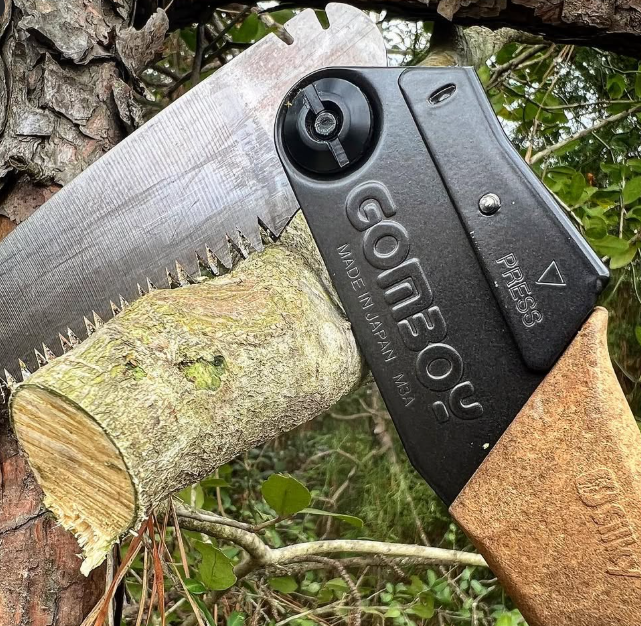
Most folding saws, the kind you throw in a backpack or keep in a toolbox, are designed with green wood and softwood in mind. Think branches, small logs, campfire wood, or pine framing. The teeth are usually large and aggressive, built to clear sawdust fast and rip through fibrous wood without binding up.
That design works brilliantly for what it was made for. But hardwood like oak, maple, hickory, or walnut is a completely different challenge. The grain is tighter, the fibres are denser, and the wood resists the blade in ways softwood simply doesn’t.
So Why Does It Still Work (Sometimes)?
Here’s the thing: hardwood isn’t some impenetrable material. It’s still wood. A sharp blade will cut it. The question is really about how well and how long it takes.
With a quality folding saw and decent technique, you can absolutely work through hardwood. I’ve cut through 2-inch oak branches with my Silky Pocketboy, and while it wasn’t effortless, it wasn’t a nightmare either. The key factors that actually matter:
Blade quality. This one is non-negotiable. A cheap folding saw with mediocre teeth will stall out, skip, and frustrate you. A Japanese-style saw with impulse-hardened teeth will handle hardwood far better than most people expect.
Tooth size and TPI. More teeth per inch (higher TPI) means a finer, slower cut, but it tends to handle hardwood better than large-toothed blades that just grab and chatter. Some folding saws come with blades specifically designed for hardwood cutting.
Blade length. Shorter blades mean shorter strokes. When you’re cutting dense wood, shorter strokes reduce your mechanical advantage. A longer blade lets you use the full length and puts more of the work on the saw rather than your arm.
Your technique. Letting the saw do the work instead of forcing it makes a huge difference. Long, steady strokes, light pressure on the push, and pulling back firmly. Grinding away with short, rapid strokes is a fast way to dull your blade and tire yourself out.
Where Folding Saws Fall Short on Hardwood
Let me be real with you here. There are situations where a folding saw on hardwood is just the wrong tool, no matter how good the saw is.
Thick stock. Trying to cut through a 6-inch hardwood log with a folding saw is going to test your patience. It’s doable, but you’ll be at it for a while. If you regularly need to cut thick hardwood pieces, a bow saw or a proper crosscut saw is a smarter call.
Straight, precise cuts. Folding saws aren’t built for precision. The blade has some flex to it, the handle geometry isn’t ideal for controlled cuts, and you don’t have a good way to guide it along a line. For rough cutting in the field, fine. For any kind of joinery or furniture work, you need something more rigid.
Extended use. If you’re processing a pile of hardwood, a folding saw will wear you out. The ergonomics aren’t designed for repetitive heavy cutting. Your hand, wrist, and forearm will feel it.
The Saws That Handle Hardwood Best
Not all folding saws are equal. If hardwood cutting is actually something you need to do regularly, here’s what to look for:
Japanese-style folding saws: brands like Silky, Suizan, and Gyokucho are a cut above (pun fully intended). They use thinner blades, finer teeth, and pull-stroke cutting, which gives you more control and less resistance in dense wood. The Silky Pocketboy and Silky Gomboy are popular picks among woodworkers and outdoors folks alike for good reason.
Replaceable blade saws: any saw worth buying for hardwood work should have a replaceable blade. Once those teeth dull on hardwood, and they will dull faster than on softwood, you want to swap in a fresh blade without buying a whole new saw.
Longer blade options: if your folding saw has a 6-inch blade, it’s a camp tool. If it has a 10 or 12-inch blade, it starts crossing into serious cutting territory.
A Quick Word on Blade Maintenance
One thing that doesn’t get talked about enough: hardwood dulls blades faster. The tight grain acts almost like an abrasive compared to soft wood. If you’re cutting a lot of hardwood with a folding saw and it starts to feel like you’re working harder for less result, the blade is probably the issue, not your technique.
Most folding saw blades can’t be resharpened; the impulse-hardened teeth on Japanese saws in particular are designed to be replaced, not re-filed. Trying to sharpen them yourself often does more harm than good. Just swap the blade.
Bottom Line
A folding saw can cut hardwood, and in the right situation, a single branch, a quick field cut, or light trimming, it does the job without complaint. But it’s not a hardwood saw at its core, and if you’re pushing it into regular hardwood work, you’ll hit its limits quickly.
If you’re choosing a folding saw and hardwood cutting is genuinely on your list, go Japanese-style with a longer blade and impulse-hardened teeth. That combination takes a tool that’s “good enough for hardwood” and turns it into one that’s actually enjoyable to use on it.
And if you’re regularly processing hardwood in any real volume, just get the right tool. Your arms will thank you.
Frequently Asked Questions
Can a folding saw cut through oak?
Yes, a folding saw can cut through oak, but it depends heavily on the thickness and the quality of your blade. Thin oak branches, 1 to 3 inches, are manageable with a good Japanese-style folding saw. Thicker oak stock will wear you down fast, and you’d be better served by a bow saw or a dedicated crosscut saw for anything beyond that.
What’s the difference between cutting hardwood and softwood with a folding saw?
Softwood cuts faster, produces more sawdust, and is forgiving on your blade. Hardwood is denser, creates fine dust rather than chips, and puts significantly more wear on the teeth. You’ll feel the difference almost immediately; hardwood just resists the blade more. Longer, slower strokes matter a lot more with hardwood than with softwood.
How do I know when my folding saw blade needs replacing?
The clearest sign is when you’re working noticeably harder for cuts that used to feel easy. A dull blade will also tend to wander and skate on the surface rather than biting in cleanly. On hardwood especially, a fresh blade versus a worn one is night and day. If you’re getting smoke or the blade feels like it’s burning rather than cutting, it’s definitely past due.
Can I use a folding saw for woodworking projects?
For rough work in the field, trimming, sizing down branches, or breaking down lumber, you don’t need precision, yes. For actual woodworking like joinery, furniture making, or anything that needs a clean, straight cut, no. The blade flex and handle geometry just aren’t built for that kind of controlled, repeatable cutting. You’d want a proper tenon saw or panel saw for workshop use.
Is a folding saw worth buying if I mainly work with hardwood?
It depends on what “work with hardwood” means for you. If you’re occasionally trimming hardwood branches on a trail, pruning mature trees, or doing light field work, a quality folding saw is absolutely worth having.
If you’re regularly processing hardwood logs or doing any kind of woodworking, a folding saw will be a frustrating secondary tool at best. In that case, invest in something purpose-built and keep the folding saw for what it does best.

I’m Alex, the voice behind Saw Mentor. With years of real, hands-on experience in the tools industry, I’ve learned one thing: the right tool makes all the difference.
At Saw Mentor, I share straightforward advice, honest reviews, and practical insights to help you make smarter decisions without the guesswork.