

So you’re mid-cut, everything’s going fine, and then nothing. The saw just dies on you. Maybe it slows to a crawl, maybe it cuts out completely, maybe it trips the breaker. Whatever version of this you’re dealing with, it’s frustrating, and it can honestly feel a little scary if you don’t know what caused it.
The good news? This is one of the more common problems people run into with circular saws, and most of the time it’s something totally fixable. Let me walk you through the real reasons this happens, not a copy-paste list, but the actual stuff that causes it in the field.
The Blade Is Binding in the Cut
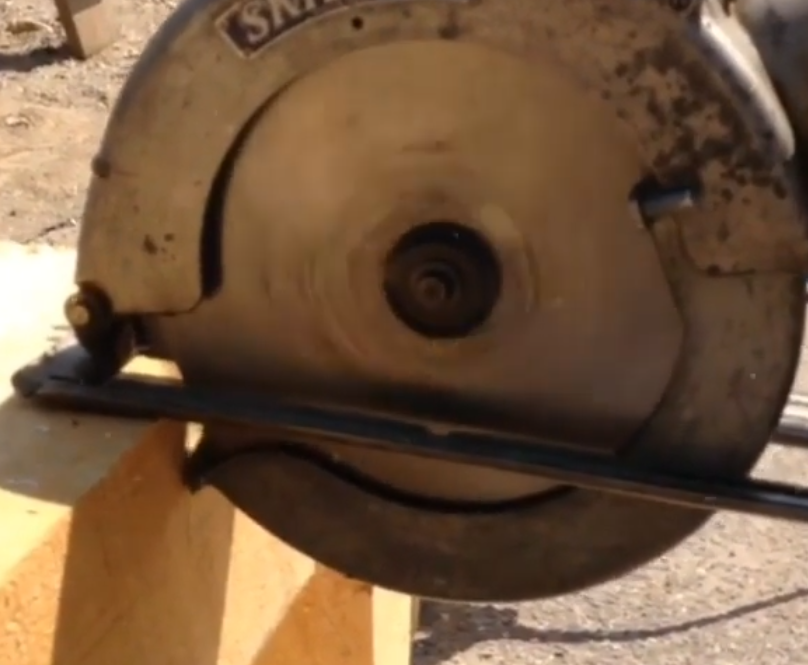
This is the number one culprit, and it catches a lot of people off guard. When you’re cutting through a board, if the wood starts to pinch the blade, the saw just stops. It has no choice.
This usually happens when you’re cutting a long piece of lumber that isn’t properly supported. As you cut further, the weight of the wood causes the two sides to sag inward, squeezing the blade like a vice. The motor fights it for a second, then gives up.
The fix is simple: support your workpiece on both sides close to the cut line. Sawhorses or foam insulation boards work great for this. The cut needs to be free to open up slightly as you go, not close in.
You’re Pushing Too Hard or Too Fast
There’s a rhythm to using a circular saw. Push too fast, and the motor can’t keep up; it bogs down, heats up, and stalls. A lot of beginners (and honestly, some experienced guys too) think more force equals faster cuts. It doesn’t. You’re just overloading the motor.
Let the blade do the work. Feed the saw at a steady pace where the motor sounds like it’s working comfortably, not straining, not screaming. If you hear it start to labor, back off a little.
Hardwoods like oak or maple need a slower feed rate than pine or plywood. If you’re switching between material types and not adjusting your pace, that’s probably your problem.
The Blade Is Dull or Wrong for the Job
A dull blade doesn’t just cut badly; it can stop the saw entirely. When a blade loses its edge, it starts rubbing and dragging instead of cutting. That creates heat and resistance, and eventually the motor can’t push through anymore.
Check the blade. If the teeth look rounded, if there’s pitch buildup on them, or if you’ve been using the same blade for months without thinking about it, that’s your answer.
Also worth checking: is the blade right for what you’re cutting? A fine-finish blade with 60 teeth is going to struggle through thick framing lumber compared to a 24-tooth ripping blade. Using the wrong blade for the job adds unnecessary load.
The Saw Is Overheating
Circular saws have thermal overload protection built in. When the motor gets too hot, it shuts itself off automatically to prevent damage. This is actually a feature, not a flaw, but it’ll definitely stop you in the middle of a cut.
Signs this is happening: the saw gets too hot to touch, there’s a burning smell, or it cuts out and won’t restart for 10–15 minutes. That last part is the giveaway; it needs time to cool down before the thermal protection resets.
If this keeps happening, you’re either pushing too hard, using a dull blade (which creates more friction and heat), or you’re doing a lot of cuts back to back without giving the saw any breathing room. Heavy-duty cutting benefits from short breaks.
The Power Supply Is the Problem, Not the Saw
Sometimes the saw is perfectly fine, and the issue is what it’s plugged into. Circular saws draw a serious amount of current, especially at startup and during cuts. If you’re running one on a long extension cord, a thin gauge cord, or through a circuit that’s already powering other tools, you can get a voltage drop, and the saw will stall or trip the breaker.
A few things to check:
- Extension cord gauge. For most circular saws, use a 12-gauge cord. A 16-gauge cord is too thin and will cause a voltage drop over any real distance.
- Cord length. The longer the extension, the more voltage drop you get. Try to stay under 50 feet if possible.
- Circuit load. If you’re on a 15-amp circuit and also have a shop vac or lights running, you might be pulling more than the circuit can handle.
Try plugging directly into a different outlet and see if the problem goes away. You might be surprised.
The Carbon Brushes Are Worn Out
This one is more of a long-term wear issue, but it’s worth knowing about. Brushed motors (which most corded circular saws use) have small carbon brushes that make electrical contact with the spinning armature. Over time, these brushes wear down. When they get too short, the saw starts cutting out intermittently, sometimes mid-cut.
If your saw is older and has been used heavily, this is worth checking. Many saws have brush caps on the side of the motor housing that you can unscrew to inspect and replace the brushes. Replacement brushes are usually cheap, just a few dollars.
There’s a Loose Connection or Internal Issue
If you’ve gone through everything above and nothing explains it, you could be looking at a loose wire, a failing switch, or a motor winding that’s starting to go. These are harder to diagnose at home.
A quick check: does the saw work fine when you first turn it on and only stop under load? That points to a motor or power delivery issue. Does it cut out randomly even when idling? That’s more likely a switch or connection.
At this point, if the saw is newer and under warranty, send it in. If it’s older, a repair shop can usually diagnose it pretty fast; sometimes it’s just a $5 switch replacement.
Quick Checklist Before Your Next Cut
Run through this whenever your saw stops mid-cut:
- Is the wood properly supported so it won’t pinch the blade?
- Are you feeding at a steady, comfortable pace, not forcing it?
- Is the blade sharp and appropriate for the material?
- Has the saw been running hot or non-stop for a while?
- What extension cord are you using, and how long is it?
- When did you last check or replace the carbon brushes?
Most of the time, one of those six things is the answer. Circular saws are actually pretty reliable tools. When they start acting up, it’s almost always something you can track down and fix without sending them in or replacing them.
Take your time figuring out which one applies to your situation, and you’ll be back to cutting in no time.