

The first time I cut a piece of lumber with a hand saw, the result looked like a coastline on a map. Wavy, uneven, and completely unusable. I blamed the saw. Then I blamed the wood. Eventually, I had to accept it was me.
The good news? Cutting straight with a hand saw is a learnable skill. It’s not about having a fancy saw or some natural gift. It’s about a few simple habits done consistently. Once these click, you’ll wonder why you ever struggled.
Why Hand Saw Cuts Go Wrong
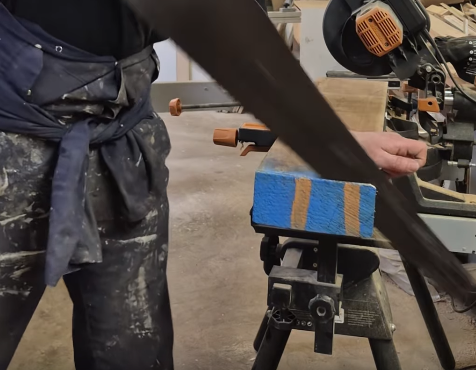
Before fixing the problem, it helps to understand what actually causes a crooked cut.
Most people grip the saw too tightly, rush the stroke, and let the blade wander without any real guide. The saw follows the path of least resistance, which is almost never a straight line through wood grain. Add in a dull blade or an awkward body position, and you’ve got a recipe for a frustrating afternoon.
The fix isn’t muscle. It’s setup, technique, and patience.
1. Mark Your Cut Line Properly
This sounds obvious, but a lot of people use a pencil and eyeball it. That’s your first mistake.
Use a marking knife or a sharp pencil with a straightedge. A marking knife is better because it creates a fine, clean line and actually scores the wood fibers slightly, which helps the saw tooth register in exactly the right spot. A thick pencil line can be 1–2mm wide, and that ambiguity adds up fast.
After marking, extend the line down both sides and across the bottom edge of the board. You want to see your cut line from every angle as you work.
2. Set Up a Cutting Guide (Don’t Skip This)
Experienced woodworkers use guides. Beginners think guides are cheating. Beginners are wrong.
The simplest guide is a piece of scrap wood clamped to your workpiece right along the cut line. You saw rides against it and physically cannot wander. Takes two minutes to set up and saves you a ruined board.
You can also buy or make a saw guide block, basically a small wooden or metal jig that clamps on and keeps the blade at exactly 90 degrees. If you’re doing a lot of hand sawing, this is worth having.
Another old-school trick: clamp a combination square to the wood and use the blade as a guide for the first few strokes until you’ve established a kerf (the groove the saw makes). Once that groove is deep enough, the saw naturally wants to stay in it.
3. Start the Cut Correctly
Starting a cut is actually the trickiest part. A bad start leads to a bad cut, full stop.
Use your thumb as a guide on the first stroke. Place your thumb right against the saw blade, just above the teeth, at your marked line. Draw the saw backward (toward you) with light pressure. Don’t push on the first stroke. This pulls out a shallow groove to guide everything that follows.
Make three or four of these pull strokes before you start using full strokes. Once you have a kerf about 3–4mm deep, your saw has a track to follow.
4. Body Position Makes a Huge Difference
Stand directly behind the saw; your eye, the blade, and the cut line should all be in the same vertical plane. If you’re standing off to the side, you’ll unconsciously steer the saw toward your body, and the cut drifts.
Keep your elbow, wrist, and shoulder all moving in a straight line. Think of it like a piston; everything moves on one axis. The moment your wrist starts twisting or compensating, the blade follows.
Your non-dominant hand holds the workpiece firmly to the bench or sawhorse. Movement in the wood = movement in the cut.
5. Let the Saw Do the Work
This is the one piece of advice every experienced woodworker gives, and it genuinely matters.
A hand saw cuts on the push stroke (for most western-style saws) or the pull stroke (Japanese saws). Either way, you should be using the weight of the saw, not muscle pressure. Pressing down hard actually makes the blade bind and wander. Use a long, relaxed stroke most of the blade length with consistent, moderate speed.
If you’re getting tired or your arm is burning, you’re working too hard. Let up on the pressure and let the teeth do their job.
6. Check Your Progress (And Correct Early)
Every five or six strokes, pause and look at your cut from the end of the board. You’ll immediately see if the blade is drifting left, right, or tilting.
If it’s drifting, don’t panic. Gently twist the handle in the opposite direction of the drift over the next few strokes. Small corrections made early are easy. Waiting until the cut is half done means starting over.
This is also why extending your line to all four sides of the board matters; you can check the back and side faces to see if you’re staying true.
7. Use the Right Saw for the Job
Not all hand saws are the same, and using the wrong one makes everything harder.
- Crosscut saw for cutting across the grain (most common cuts). Teeth are designed to sever wood fibers cleanly.
- Rip saw for cutting along the grain. Fewer, larger teeth that act more like chisels.
- Japanese pull saw cuts on the pull stroke, with a thinner kerf, are very controllable. Many people find these easier to use for precise work.
If your saw is dull, get it sharpened or replace it. A dull blade wanders because you’re applying more pressure to compensate, which kills control. This is probably the most underrated factor in bad cuts.
A Quick Recap Before You Head to the Shop
- Mark your line with a knife, not a fat pencil
- Use a guide block or scrap fence, no shame in it
- Start the cut with pull strokes and your thumb as a guide
- Stand directly behind the cut, eye in line with the blade
- Light pressure, long strokes, let the saw work
- Check and correct drift early, not late
Cutting straight with a hand saw won’t happen perfectly on your first try. But with these habits in place, you’ll improve faster than you think. The satisfaction of a clean, square cut that fits perfectly, with no gaps, no rocking s genuinely one of the better feelings in woodworking. Worth the practice.
Now go make some sawdust.