

A chainsaw is a powerful and useful tool for cutting wood, trimming trees, and handling outdoor work. But many users face a common problem: the chainsaw stops cutting straight and starts pulling to one side. Instead of smooth and even cuts, the saw produces crooked, angled, or curved cuts. This issue is frustrating, slows down work, and can even become dangerous if ignored.
If you are asking, “Why is my chainsaw not cutting straight?”, the answer is usually not one single problem. It is often a combination of chain sharpness, guide bar condition, maintenance issues, and cutting technique. The good news is that most of these problems are easy to fix once you understand them.
In this article, we will explain all the main reasons your chainsaw is not cutting straight and how you can fix them safely.
Uneven Chain Sharpening
One of the most common reasons a chainsaw cuts crooked is uneven chain sharpening. The chain has cutting teeth on both sides, and they must be equally sharp and the same size.
If one side is sharper than the other, the chainsaw will naturally pull toward that side while cutting. This results in curved or angled cuts instead of straight ones.
This problem usually happens when:
- The chain is sharpened by hand without proper angle control
- One side is filed more than the other
- Sharpening is rushed or done unevenly
Even a small difference in tooth length can affect cutting direction. To fix this, the chain should be sharpened evenly using a proper file guide or sharpening tool. Regular and balanced sharpening keeps the chainsaw cutting straight and smooth.
Worn or Damaged Guide Bar
The guide bar is another important part that controls how straight the chainsaw cuts. It guides the chain and keeps it aligned during operation.
Over time, the guide bar can wear out due to friction and continuous use. When the bar becomes uneven or damaged, the chain may tilt slightly during cutting. This causes the saw to drift to one side.
Common signs of a worn guide bar include:
- Uneven cutting lines
- Chain wobbles during use
- Visible wear on bar edges
Dirt buildup in the bar groove can also affect performance. Regular cleaning and turning the guide bar can help extend its life. However, if the bar is badly worn or bent, replacement is the best solution.
Worn Chain or Incorrect Chain Type
A worn-out chain is another major reason why a chainsaw does not cut straight. When the chain becomes dull, it stops biting into the wood properly and starts sliding unevenly.
This leads to:
- Rough cuts
- Slow performance
- Pulling to one side
Another issue is using the wrong chain type for your chainsaw. Every chainsaw is designed for a specific chain size and type. If the chain does not match the saw properly, it will not sit correctly on the guide bar and can cause uneven cutting.
To avoid this problem:
- Replace dull chains regularly
- Always use the correct chain recommended by the manufacturer
- Avoid low-quality chains that wear out quickly
A sharp and properly fitted chain is essential for straight and clean cutting.
Improper Chain Tension
Chain tension plays a very important role in cutting accuracy. If the chain is too loose, it may wobble during cutting and lose direction control. If it is too tight, it creates friction and reduces smooth movement.
Both situations can lead to uneven or crooked cuts.
Correct chain tension should allow the chain to move freely but still stay firmly attached to the guide bar. It should not hang loosely or feel overly tight. Checking chain tension regularly before use helps maintain proper cutting performance.
Cutting Technique and External Factors
Sometimes the problem is not the chainsaw itself but how it is being used. Poor cutting technique can easily cause crooked cuts.
Common mistakes include:
- Applying uneven pressure
- Twisting the saw during cutting
- Forcing the blade through wood
- Cutting at awkward angles
A chainsaw should be allowed to cut naturally. Forcing it reduces control and increases the chance of drifting off line.
External factors also play a role. Cutting dirty wood, frozen logs, or wood with hidden nails or debris can damage the chain and affect cutting direction. Even cutting at an unstable position or standing in the wrong posture can impact accuracy.
To improve results, always:
- Hold the saw firmly with both hands
- Maintain a stable stance
- Let the chain do the work
- Inspect wood before cutting
Lack of Proper Maintenance
Poor maintenance is another hidden reason behind crooked cutting. A chainsaw needs regular cleaning and lubrication to perform properly.
If sawdust, dirt, or oil buildup collects on the bar and chain, it can interfere with smooth movement. This leads to uneven cutting and poor performance.
Important maintenance steps include:
- Cleaning the chain and guide bar after use
- Checking oil levels regularly
- Removing debris from the bar groove
- Inspecting parts for wear
A well-maintained chainsaw always performs better and cuts straighter.
Wrong Cutting Pressure
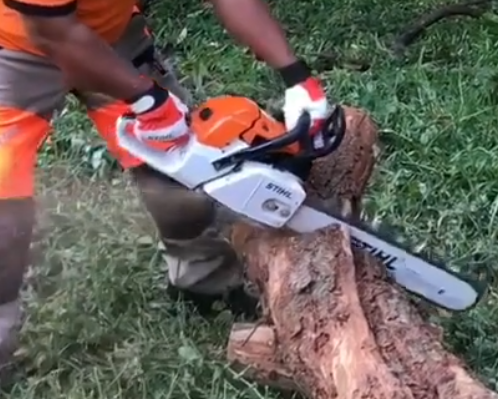
Applying too much pressure while cutting is a common beginner mistake. Many users think pushing harder will make the chainsaw cut faster, but it actually causes problems.
Excess pressure can:
- Bend the cutting line
- Overheat the chain
- Reduce control
- Cause uneven cutting
Instead, the chainsaw should glide through the wood with steady and light pressure. Letting the chain do the work gives much better and straighter results.
Dirty or Damaged Wood
The condition of the wood itself can also affect cutting accuracy. If the wood contains dirt, stones, or nails, it can damage the chain and cause it to cut unevenly.
Similarly, very hard or frozen wood can resist cutting and make the saw drift off course.
Always inspect wood before cutting to avoid hidden damage that can affect performance.
How to Fix a Chainsaw That Is Not Cutting Straight
If your chainsaw is cutting crooked, follow these steps to fix it:
- Sharpen the chain evenly on both sides
- Check and replace a worn guide bar
- Use the correct chain type
- Adjust chain tension properly
- Clean and lubricate the saw regularly
- Improve cutting technique
In most cases, fixing one or two of these issues will immediately improve cutting accuracy.
Final Thoughts
A chainsaw not cutting straight is a common problem, but it is usually easy to fix. The main causes include uneven chain sharpening, a worn guide bar, a dull or incorrect chain, improper tension, poor technique, and lack of maintenance.
By keeping your chainsaw sharp, clean, and properly adjusted, you can ensure smooth, straight, and safe cutting every time. Proper handling and regular care not only improve performance but also increase the life of your chainsaw.
With the right maintenance habits and safe cutting techniques, you can avoid crooked cuts and make your chainsaw work more efficiently for all types of wood cutting tasks.