

If you need to replace your circular saw blade, the first step is knowing exactly what size you need. Buying the wrong blade can lead to poor cutting performance, difficulty installing it, and unnecessary frustration.
The good news is that measuring a circular saw blade is straightforward. With a few basic tools and a couple of minutes, you can determine the exact blade size and choose the right replacement with confidence.
This guide explains everything you need to know in simple terms.
Why Measuring a Circular Saw Blade Matters
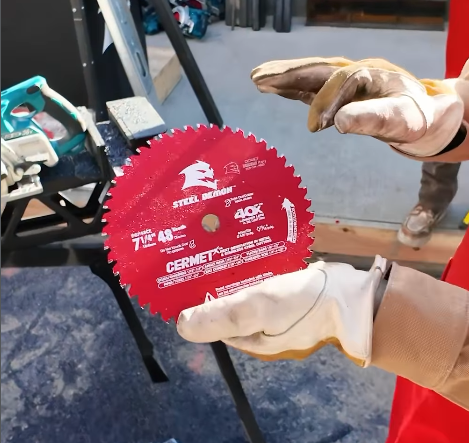
A circular saw works best when the blade matches the tool’s specifications. Even a slight mismatch can affect how the saw performs.
Using the correct blade size helps ensure:
- Smooth and accurate cuts
- Better overall performance
- Safer operation
- Less wear on your saw
Before purchasing a replacement blade, it is always worth taking the time to measure properly.
What You Need to Measure
There are three main things to check when measuring a circular saw blade:
- Blade diameter
- Arbor hole size
- Tooth count
Each measurement plays an important role in compatibility and performance.
Step 1: Measure the Blade Diameter
The diameter is the distance from one edge of the blade to the opposite edge, measured straight through the center.
To measure it:
- Lay the blade flat on a stable surface
- Place a ruler or measuring tape across the center
- Measure from one outer edge directly to the other
Common circular saw blade diameters include:
- 6.5 inches
- 7.25 inches
- 10 inches
- 12 inches
The 7.25-inch blade is one of the most commonly used sizes for handheld circular saws.
In many cases, the blade size is already printed on the blade itself, which can save time.
Step 2: Measure the Arbor Hole
The arbor hole is the circular opening in the center of the blade that fits onto the saw.
To measure the arbor hole:
- Measure straight across the center opening
- Record the diameter
Typical arbor sizes are:
- 5/8 inch
- 1 inch
This measurement is critical because the blade must fit securely onto the saw’s arbor. If the hole is too large or too small, the blade cannot be installed properly.
Step 3: Count the Teeth
The number of teeth around the blade affects the type of cut it produces.
Blades with fewer teeth cut faster but leave rougher edges. Blades with more teeth produce smoother cuts but often cut more slowly.
A general guide:
- 24 to 40 teeth: Best for quick, rough cuts
- 60 to 80 teeth: Better for clean, precise cuts
- 100 or more teeth: Ideal for fine finishing work
If you are replacing an existing blade, matching the tooth count is usually a safe choice.
Step 4: Check the Blade Thickness
Blade thickness, often called the kerf, also matters.
Thin kerf blades:
- Cut faster
- Waste less material
- Require less power
Thicker blades:
- Offer more stability
- Last longer under heavy use
You can measure blade thickness using calipers if precision is important.
Safety Before Measuring
Before handling any circular saw blade, always make sure the saw is disconnected from power.
Take these precautions:
- Unplug corded saws
- Remove batteries from cordless models
- Wear gloves to protect your hands
- Handle blade teeth carefully
Safety should always come first.
Common Measuring Mistakes
Many people make simple mistakes when measuring saw blades.
Avoid these common errors:
Measuring off-center
Always measure through the exact middle of the blade.
Ignoring the arbor hole size
Diameter alone is not enough.
Estimating instead of measuring
Even small differences matter.
Overlooking tooth count
The wrong tooth configuration can affect cut quality.
Example Measurement
Imagine your blade measures:
- 7.25 inches in diameter
- 5/8-inch arbor hole
- 24 teeth
You would need a replacement blade with those exact specifications.
This ensures proper fit and consistent cutting performance.
Final Thoughts
Knowing how to measure a circular saw blade is an essential skill for anyone who uses power tools.
By checking the blade diameter, arbor size, tooth count, and thickness, you can choose the right replacement and keep your saw working efficiently.
A few careful measurements can save time, prevent mistakes, and help you get cleaner, safer cuts on every project.

I’m Alex, the voice behind Saw Mentor. With years of real, hands-on experience in the tools industry, I’ve learned one thing: the right tool makes all the difference.
At Saw Mentor, I share straightforward advice, honest reviews, and practical insights to help you make smarter decisions without the guesswork.
1 thought on “How to Measure a Circular Saw Blade”