

If you’ve ever tried to cut through a thick piece of lumber and felt like your saw was fighting back, you’re not imagining things. It’s one of those frustrations that hits woodworkers at every level, from the guy in his backyard trying to cut fence posts to someone building furniture who just picked up a new blade.
The saw bogs down, the cut drifts, the wood starts burning, and you end up more exhausted than the project called for. So what’s actually going on?
There are real, physics-based reasons why saws struggle with thick wood, and once you understand them, you can actually do something about it.
The Friction Problem Gets Worse the Deeper You Go
Here’s the thing about cutting wood: friction isn’t just a minor inconvenience; it’s the main enemy. When a blade enters a thin piece of wood, only a small portion of the blade’s sides is in contact with the material. But as the thickness increases, more and more of the blade is rubbing against the wood on both sides of the kerf (that’s the slot the blade cuts).
This extended contact generates heat fast. Heat softens the blade slightly, causes resin and sap to melt and stick to the teeth, and starts to burn the wood fibers rather than cut them cleanly. You’ll notice this as smoke, a scorched smell, and dark burn marks along the cut line. That’s not the saw working harder, that’s the saw losing.
The Blade Loses Rigidity Under Load
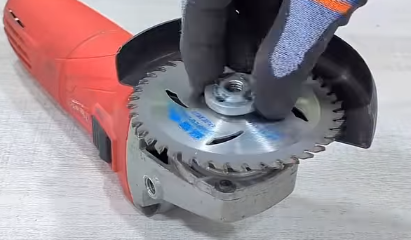
Thicker wood puts a lot of lateral pressure on a blade. A blade that’s perfectly stiff at shallow depths starts to flex when it’s buried deep in dense lumber. This flexing is what causes that infuriating drift where the blade wanders off your cut line even when you’re guiding it carefully.
It’s not a technique problem (at least not entirely). The blade itself is bending under load, and a bent blade will always follow the path of least resistance rather than the one you drew.
This is especially common with circular saws and band saws. Circular saw blades are designed to be thin to reduce drag, but that thinness becomes a liability in thick stock. Band saw blades face a similar issue: the narrower the blade, the more it wants to twist and wander.
The Motor Has to Work Against Itself
Every saw motor is rated for a certain load. When you’re cutting a 1-inch board, that motor barely notices. When you push the same saw into a 4-inch hardwood beam, the resistance increases dramatically, not just doubled, but multiplied based on the contact area and wood density.
What happens when a motor is overloaded? It slows down. And when the blade slows down, it stops cutting cleanly and starts tearing. The teeth don’t have the speed to shear wood fibers anymore; they drag instead. This creates more heat, more friction, more resistance, and the whole cycle compounds itself. Underpowered saws will stall outright. Slightly more powerful ones will limp through but leave a rough, burned cut.
Tooth Count and Design Matter More Than You Think
A blade with too many teeth is actually a problem in thick wood. High tooth count blades are designed for thin materials where you want a smooth, fine cut. In thick stock, all those closely-spaced teeth pack up with sawdust almost immediately. There’s nowhere for the debris to go, so it compresses and clogs the kerf, increasing drag dramatically.
For thick wood, you want fewer teeth with deeper gullets, the curved spaces between the teeth that carry waste material away from the cut. These blades are more aggressive and leave a rougher surface, but they actually cut through thick lumber efficiently instead of grinding their way through it.
Wood Density and Moisture Work Against You
Not all thick wood is created equal. A thick piece of pine behaves completely differently from a thick piece of oak or maple. Hardwoods resist cutting on a cellular level; the fibers are tighter, the grain is denser, and the resistance per inch of depth is much higher.
Green or wet wood adds another layer of difficulty because moisture makes wood fibers more flexible, which means they compress rather than shear cleanly, leading to binding and pinching around the blade.
Pinching is particularly nasty. When the two sides of a cut press back together and grip the blade, the saw can kick back suddenly or stall completely. It happens more in thick stock because there’s more wood on both sides, exerting pressure.
What You Can Actually Do About It
Knowing the problem is half the battle. A few practical adjustments make a real difference. Using the right blade for the job, one with fewer, larger teeth designed for ripping thick material, changes the whole experience.
Setting your blade depth correctly matters too; a circular saw blade should only extend about a quarter inch below the bottom of the wood, which reduces the amount of blade in contact with the material and improves cooling.
Letting the saw do the work rather than pushing hard keeps the teeth cutting at the right speed rather than dragging. And cutting in multiple passes on especially thick stock, removing material gradually rather than in one go, saves both the blade and the motor.
Lubrication is another underrated move. A bit of saw blade lubricant or even wax on the blade dramatically reduces friction and heat, especially in long rip cuts through dense hardwood.
Thick wood isn’t impossible; it just needs the right approach and a realistic understanding of what your tools are capable of.
Frequently Asked Questions
Why does my circular saw burn the wood when cutting thick lumber?
Burning usually happens because the blade is moving too slowly through the material, either due to a dull blade, too many teeth for the thickness, or feeding too slowly. The friction between the blade and wood generates heat faster than it can dissipate.
Try a ripping blade with fewer teeth, make sure your blade is sharp, and maintain a steady feed rate rather than stopping and starting.
Can I use any saw to cut thick wood, or do I need a specific type?
Not every saw is suited for thick cuts. A standard circular saw struggles past about 2.5 inches at full depth. For anything thicker, a track saw, a miter saw with a large blade, a band saw, or a chainsaw mill is more appropriate depending on the type of cut. Using the wrong saw for the thickness is one of the most common causes of poor results.
Why does my saw blade keep drifting when I cut thick boards?
Blade drift in thick wood usually comes down to one of three things: the blade is too thin and flexing under lateral pressure, the blade is dull and finding the path of least resistance through the grain, or the fence or guide isn’t rigid enough to hold the line. A thicker, stiffer blade designed for ripping, combined with a solid fence, eliminates most drift issues.
Does blade sharpness really make that much difference in thick wood?
More than most people realize. A dull blade doesn’t just cut slower; it generates far more heat because it’s tearing rather than slicing. In thin wood, a slightly dull blade is annoying. In thick wood, it’s the difference between a clean cut and a burned, rough mess that wanders all over the line. Keeping blades sharp is the single easiest improvement you can make.
Why does my saw stall or bog down in the middle of a thick cut?
This is almost always a motor load issue. The saw is being asked to remove more material than the motor can handle at that speed. Contributing factors include a dull blade, too many teeth, feeding too fast, or simply a saw that’s underpowered for the task.
Slowing your feed rate, using the right blade, and making sure the blade depth is set correctly usually resolves stalling. If the saw consistently stalls, it may be undersized for the work you’re asking it to do.

I’m Alex, the voice behind Saw Mentor. With years of real, hands-on experience in the tools industry, I’ve learned one thing: the right tool makes all the difference.
At Saw Mentor, I share straightforward advice, honest reviews, and practical insights to help you make smarter decisions without the guesswork.