

If you’ve ever pushed a piece of thick lumber through your saw and felt it bog down, groan, or just plain give up on you, you’re not alone. It’s one of those things that happens to almost every woodworker, beginner or not, and most people just crank the feed rate down and move on without really understanding what’s going on under the hood.
But knowing why it happens can save your blade, your motor, and, honestly, a lot of frustration. So let’s get into it.
It’s a Load Problem, Plain and Simple
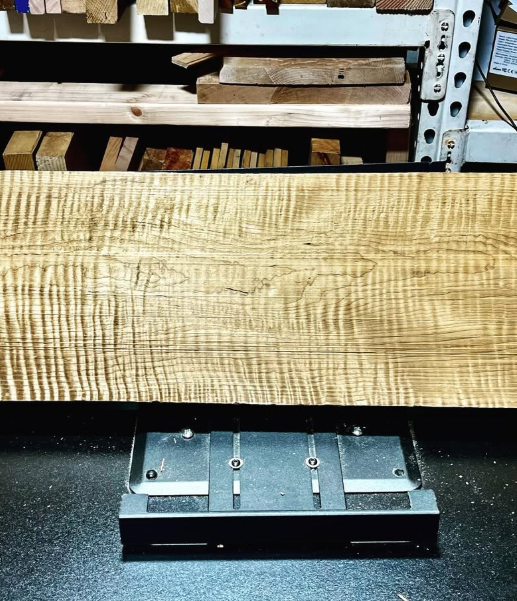
When your saw blade hits thin material, it’s cutting a small amount of wood per tooth per revolution. The motor handles that easily. The blade spins fast, the chips fly out, everything’s happy.
Now double or triple that thickness. Suddenly, each tooth has a lot more material to chew through. The resistance goes up dramatically. The motor is working harder, the blade is flexing more, and if the motor can’t keep up with the demand, it slows down sometimes to the point where you can smell it.
That’s not a defect. That’s just physics.
What’s Actually Resisting the Blade
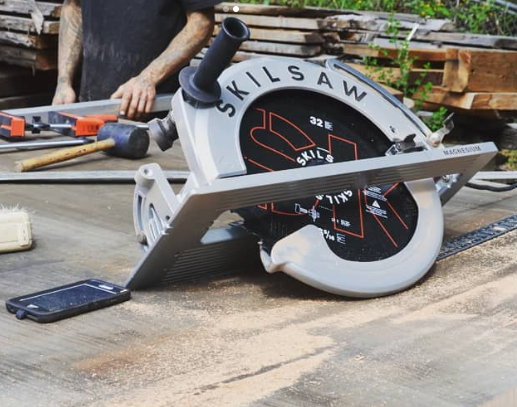
There are a few things working against you when you cut thick stock:
Friction along the kerf. In thin material, the blade enters and exits the cut pretty quickly. In thick wood, the blade is in contact with the walls of the cut for a much longer time per rotation. That contact creates friction, which creates heat, which slows everything down and dulls your blade faster.
Chip clearance. Saw teeth are designed to remove material; the little pockets between teeth (called gullets) carry the sawdust and chips out of the cut. In thick wood, those gullets fill up fast. When they’re full, the blade isn’t really cutting anymore; it’s just dragging compacted sawdust through the kerf and generating heat. Not great.
Feed resistance. As you push the wood forward, you’re fighting against both the cutting force and the friction on the sides of the blade. In thick stock, that combined resistance is noticeably higher. Push too hard, and you’ll stall. Push too slowly, and you’ll burn.
Your Blade Probably Isn’t Helping
Here’s a thing people don’t always want to hear: a dull blade makes thick wood a nightmare. Even a blade that works fine on 3/4″ material will show its age the moment you throw a 3″ hardwood slab at it.
Dull teeth don’t cut cleanly; they scrape and compress the wood fibers instead of slicing through them. That means more friction, more heat, more motor load, and a slower cut. If you notice thick wood slowing your saw down more than it used to, check your blade before anything else.
Also consider the tooth count. High tooth count blades (60, 80 teeth) are great for fine crosscuts in thin material. In thick rips, they’re a bad choice. The gullets are small; they fill up fast, and the blade drags. For ripping thick lumber, you want a lower tooth count ripping blade, 24 or 40 teeth, with big gullets that can clear material efficiently.
Does the Wood Species Matter?
Absolutely. A 2-inch piece of pine is a very different conversation than a 2-inch piece of hard maple or white oak. Dense hardwoods have tightly packed wood fibers that resist cutting a lot more than softwoods. The moisture content plays a role; too green or wet wood can gum up a blade pretty badly and add to the load.
If you’re constantly cutting thick, dense hardwood and your saw is struggling, that’s worth paying attention to. Either your blade isn’t matched to the task, or your saw’s motor isn’t rated for that kind of work.
What You Can Do About It
A few things that actually help:
Match your blade to the cut. Ripping blade for thick rips. Fewer teeth, bigger gullets. It makes a real difference.
Slow your feed rate, not to a crawl, but to a pace where the blade has time to clear chips without filling up. You’ll feel the right rhythm after a while.
Check blade sharpness regularly. If you can’t remember the last time you sharpened or replaced a blade, it’s probably time.
Make sure your blade is the right height. With a table saw, raising the blade so that about 1/4 inch sits above the material helps the teeth enter and exit the cut at a better angle, which reduces load.
Consider multiple passes. For really thick stock, sometimes two passes, cutting halfway through, flipping the board, and cutting from the other side, are smarter than fighting a single pass that’s too much for your setup.
The Bottom Line
Thick wood slows down your saw because it demands more from every part of the system: the motor, the blade, and the feed rate. It’s not just about power. It’s about how well your blade can manage heat, friction, and chip clearance across a longer cut. Get the right blade, keep it sharp, and feed at the right speed, and most of that sluggishness goes away.
Once you understand what’s happening inside that kerf, it’s a lot easier to troubleshoot on the fly instead of just hoping the saw will push through.

I’m Alex, the voice behind Saw Mentor. With years of real, hands-on experience in the tools industry, I’ve learned one thing: the right tool makes all the difference.
At Saw Mentor, I share straightforward advice, honest reviews, and practical insights to help you make smarter decisions without the guesswork.