

So your circular saw is scorching pine like it’s got a grudge against it. You’re not alone; this is one of the most common frustrations woodworkers run into, and the annoying part is that soft wood should be the easy stuff.
If your blade is leaving black char marks, a smell like a campfire, and rough edges that need hours of sanding, something’s off. Let’s talk about what’s actually happening and how to fix it for good.
The Real Reason Burning Happens
Here’s the honest truth: burning isn’t random. Your blade is generating too much friction in one spot or moving too slowly through the cut, and the heat has nowhere to go. Soft woods like pine, cedar, and spruce have a lot of resin in them.
That resin melts when it gets hot and then bakes onto the blade teeth, and once that starts happening, every single cut gets worse. The blade gets gumier, friction builds up more, and before you know it, you’re dragging a hot, dirty blade through wood that’s screaming at you.
Your Blade Is Probably Dull (Or Just the Wrong One)
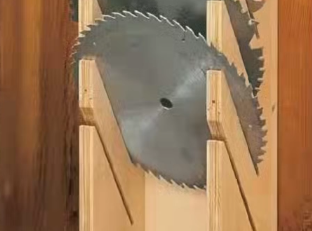
This is the first thing to check. A dull blade doesn’t slice; it pushes and scrapes, building up heat instead of moving through cleanly. Even a blade that looks fine to the eye might be past its prime. If you’ve been running it through hardwood, engineered lumber, or anything with nails or knots, the teeth could be dulled way faster than you’d expect.
Beyond dullness, you might just have the wrong blade for the job. A blade with too many teeth creates more contact points and more friction, great for fine finish cuts on hardwood, but terrible for ripping soft wood quickly.
For ripping pine or cedar along the grain, you want a blade with fewer teeth, somewhere in the 24-tooth range. More teeth mean more rubbing. Fewer teeth mean each tooth takes a bigger bite and clears out faster, which keeps things moving and keeps heat down.
Pitch and Resin Buildup Is Killing Your Cuts
Even a sharp blade can burn if it’s coated in resin. Soft woods dump a ton of pitch, and it sticks to the carbide tips like glue. You can actually see a dark brownish-black gunk around the teeth. Run your finger along the blade (carefully, with it unplugged), and if it feels sticky or gummy, that’s your problem.
Cleaning it takes maybe ten minutes and costs almost nothing. Get a blade cleaning solution from any hardware store, or even oven cleaner works in a pinch. Spray it on, let it sit for a few minutes, then scrub with an old toothbrush and rinse. You’ll probably be shocked how much cleaner the blade looks and how much better it cuts right after.
Feed Rate Matters More Than People Think
How fast you’re pushing the wood through matters a lot. Too slow, and you’re letting the blade sit in one spot, spinning and generating heat without going anywhere. Too fast and you’re overloading the motor and risking tearout.
Soft wood likes a steady, confident feed rate, not timid, not rushed. If you find yourself slowing down because the saw sounds like it’s struggling, that’s a sign your blade needs attention, not that you need to slow down further.
The sound of a healthy cut in pine is clean and consistent. If it sounds labored or you smell burning almost immediately, stop and deal with the blade first.
Blade Depth Is a Surprisingly Big Deal
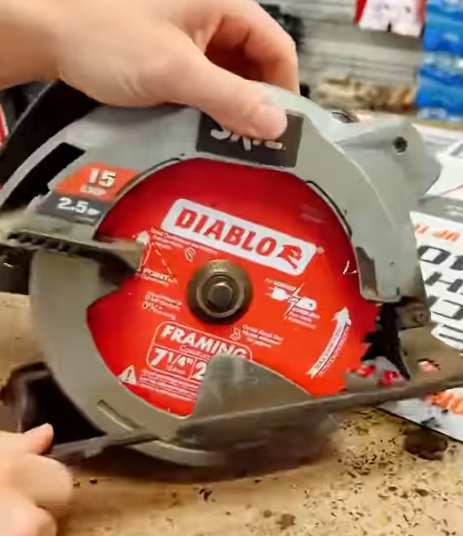
A lot of people set their blade depth way deeper than it needs to be, thinking it doesn’t matter. It does. You want the blade to extend no more than about a quarter inch below the bottom of the workpiece.
When the blade goes too deep, more of it is buried in the wood at any given time, more teeth in contact, more friction, more heat. A shallower depth means the blade moves through more efficiently and has a better chip-clearing angle. It’s a quick adjustment that makes a real difference.
Check Your Saw’s Alignment
If you’ve tried everything and are still getting burns, it might be a mechanical issue. A blade that’s not perfectly parallel to the fence or the cut line will drag slightly as it moves through the wood. That drag creates friction on the side of the blade rather than at the cutting edge, which is a fast way to get burn marks even with a brand-new sharp blade.
Take a few minutes to check that your fence is parallel to the blade and that the blade itself isn’t warped or wobbling. Even a tiny amount of wobble shows up as burning in soft, resinous wood.
A Note on Blade Coatings
Some blades come with anti-friction coatings, usually a dull silver or gold finish on the plate. These coatings genuinely help reduce heat buildup, especially in resinous woods. If you’re doing a lot of softwood work, it’s worth looking for a blade that specifically mentions a friction-reducing coating. It’s not a gimmick; the difference in how clean the cut runs is noticeable.
The Fix Is Usually Simple
Most of the time, burning in soft wood comes down to one of three things: a dirty blade, a dull blade, or too many teeth for the type of cut you’re making. Clean the blade, check the sharpness, make sure you’ve got the right tooth count for ripping versus crosscutting, set your blade depth correctly, and maintain a steady feed rate. Do those things, and the burning almost always goes away.
Soft wood is supposed to be forgiving. When a circular saw starts making a mess of it, the saw is telling you something needs attention, and it’s almost never the wood’s fault.
FAQs
Why does my circular saw burn wood even with a new blade?
A new blade can still burn if it has too many teeth for the type of cut, if the blade depth is set too deep, or if the feed rate is too slow. Also, check that the blade is properly aligned with the fence; a slight angle causes drag and burning even on a fresh blade.
How do I know if my blade needs cleaning versus replacing?
If the blade is visibly coated with dark pitch or resin buildup, clean it first. If cleaning doesn’t help and the teeth look rounded or chipped under a close look, it’s time to replace or resharpen. A blade that burns after cleaning is usually dull.
What tooth count is best for cutting soft wood like pine?
For ripping softwood along the grain, a 24-tooth blade is ideal. For crosscuts, a 40-tooth blade works well. Avoid using 60- or 80-tooth finish blades for general softwood cutting too many teeth means too much friction.
Can a cheap blade cause burning even if it’s sharp?
Yes. Budget blades often use lower-grade carbide that loses its edge faster and may not have the proper tooth geometry for efficient chip clearing. They also tend to lack anti-friction coatings. Investing in a mid-range blade from a reputable brand makes a noticeable difference in cut quality.
Does wood moisture affect burning?
Absolutely. Green or wet wood is more resistant and harder to cut cleanly, but very dry wood, especially kiln-dried pine, can also burn easily because it has little moisture to help carry heat away. Make sure you’re using properly seasoned lumber and that it’s stored in stable conditions before cutting.

I’m Alex, the voice behind Saw Mentor. With years of real, hands-on experience in the tools industry, I’ve learned one thing: the right tool makes all the difference.
At Saw Mentor, I share straightforward advice, honest reviews, and practical insights to help you make smarter decisions without the guesswork.